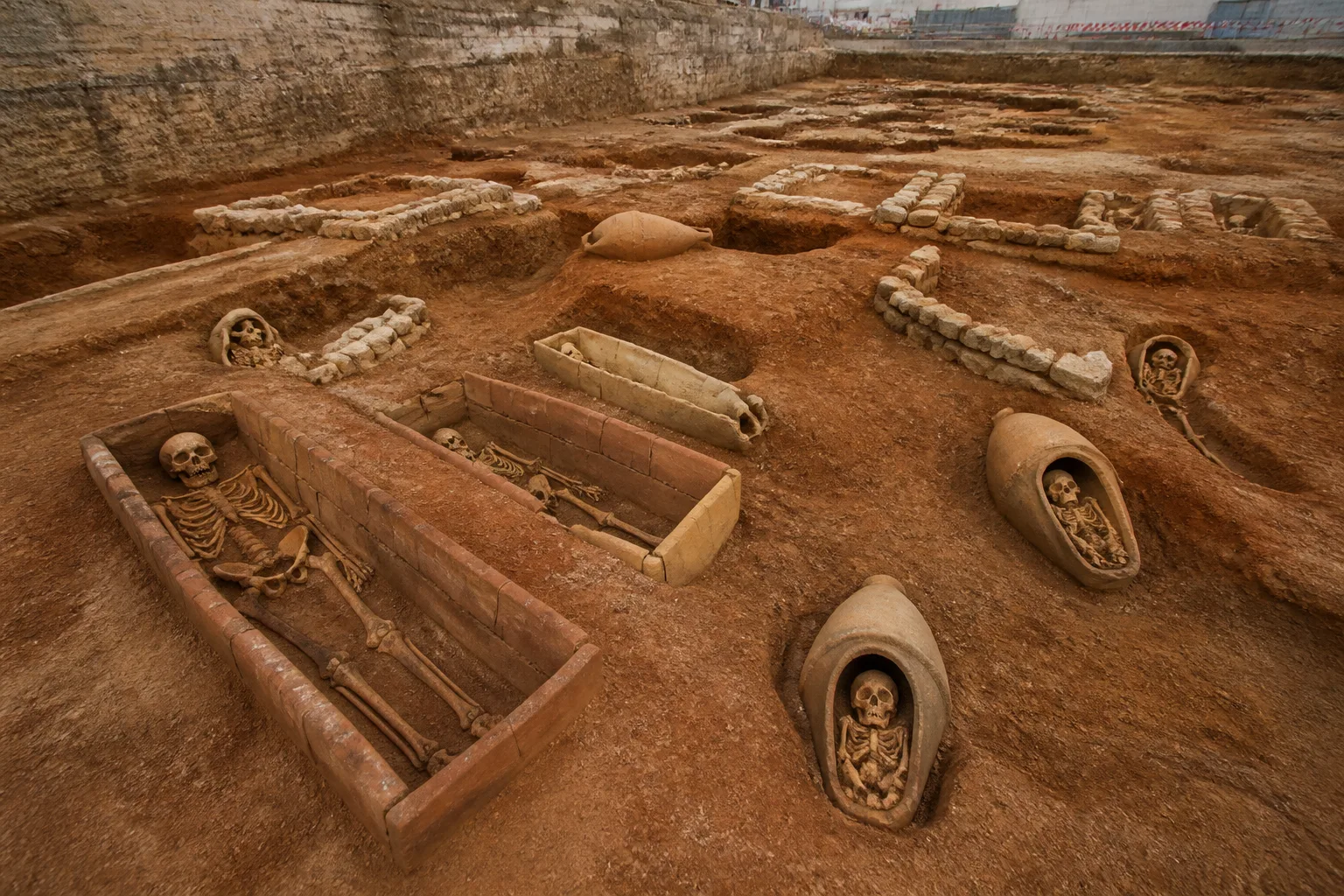
Construction of the Málaga Metro extension towards Hospital Civil and the planned third hospital has exposed a Roman burial ground stretching for about 400 metres along Calle Hilera. The site is opposite the second El Corte Inglés building, and archaeologists say it is among the largest and best-preserved Roman necropolises in Spain.
So far, the excavation has recorded 984 burial complexes containing more than 1,000 people, according to figures cited by the regional public works ministry. The number may rise: further graves are expected as work continues towards the El Corte Inglés end of the site.
The burials date from the second to fourth centuries AD. Archaeologists have identified several forms, including graves lined with roof tiles, stone-built cists, simple pits and newborns buried in amphorae. Grave goods are uncommon, and some graves were reused. The remains were found in reddish clay beneath layers later used for gardens.
The necropolis appears to have been arranged around several burial enclosures beside what may have been a route out of the Roman city towards the coast. Its discovery is prompting a reassessment of the area’s ancient funerary landscape: Hilera had previously been thought to be land reclaimed from the sea during the Islamic period.
Archaeologists and anthropologists are studying the human remains. Once that work is complete, they are due to be transferred to storage at the Málaga Museum, housed in the former customs building. The most distinctive finds are expected to be kept in a future exhibition space beside the metro tunnel at Guadalmedina station. Plans call for one example of each type of tomb to be displayed there.
The excavation is being carried out alongside the metro project. Clearing sections of the site allows work to proceed on the roof slab of the underpass, but the archaeological work is not finished. Regional public works minister Mario Muñoz-Atanet told SUR that the current phase, initially expected to finish in November, is likely to continue into the early months of 2027. He said the delays were not expected to affect the project’s final deadline.
A separate museum project on Avenida de Andalucía is being drawn up after receiving favourable reports from the regional culture department and Málaga City Council. Its future management has not yet been decided; the council could run the space if it chooses to do so.