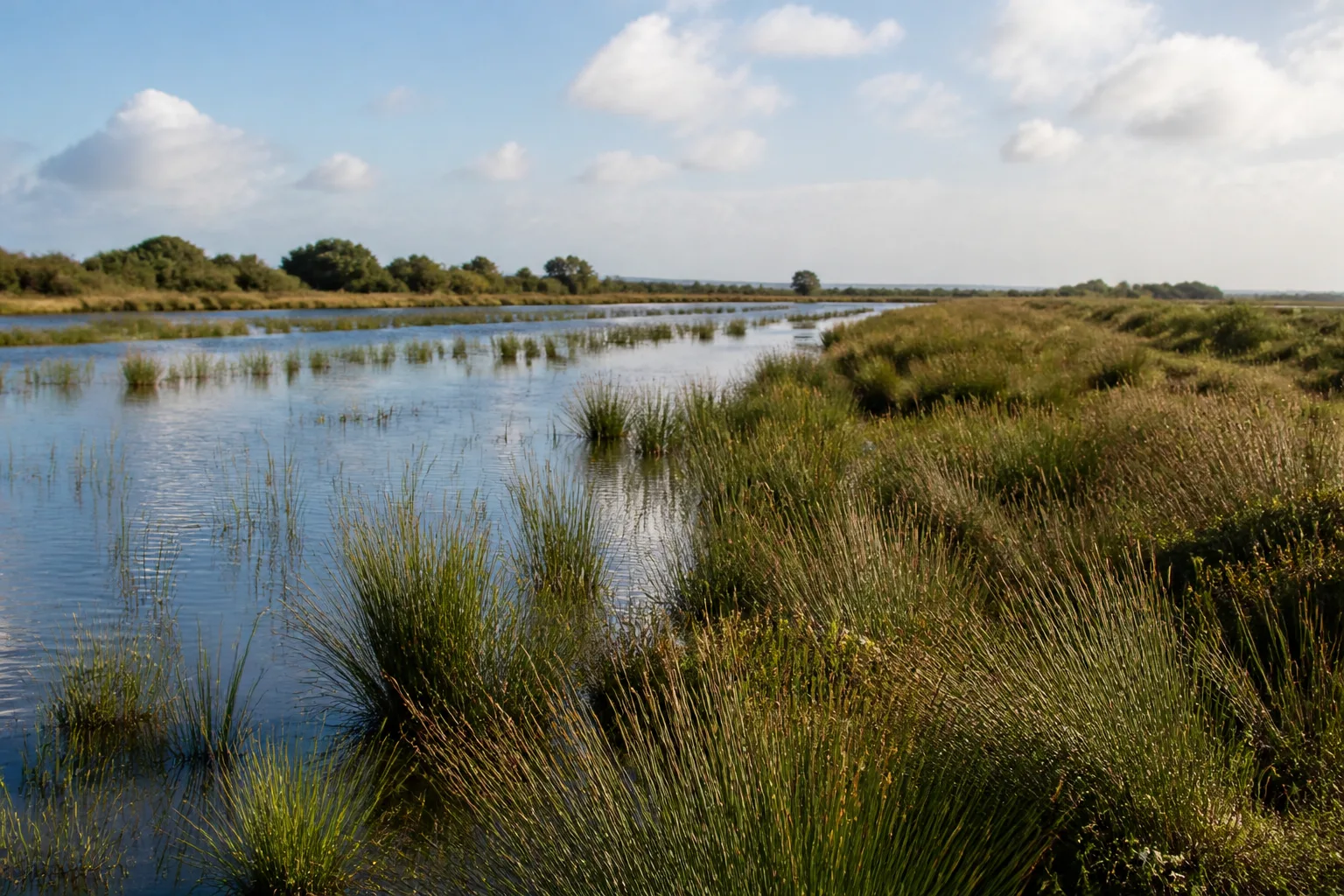
The Andalusian regional government has invested €86.1 million since 2022 in acquiring new sites, restoring degraded areas and improving wetland habitats. That amount adds to spending since 2019, bringing the total investment in wetlands to around €100 million, according to the government.
The acquisitions include the 7,600-hectare Veta la Palma estate in the Doñana Natural Area, purchased for more than €72.6 million in December 2023, and the Tierras Bajas estate, also in Doñana. The latter covers more than 1,100 hectares and was bought for close to €6 million in December 2024. Together, the purchases brought more than 8,700 hectares of environmentally valuable land under public management. Work at the sites includes improving water flows, naturalising ponds and banks, planting vegetation and preparing areas important for species’ breeding, as well as research to inform future management.
Other acquisitions include Laguna del Conde, also known as Salobral, in Córdoba. The purchase added 64 hectares for €128,000, followed by a second five-hectare parcel bought for €85,000. In Málaga, more than 10 hectares at Laguna de Camuñas were acquired for nearly €154,000.
Restoration projects include work on the Trebujena marshes near the lower Guadalquivir, funded with close to €2 million, to restore water dynamics and improve wildlife habitats. In Córdoba, work at the Lagunas del Sur has focused on habitat restoration, water quality and site management. More than €2.3 million has been allocated to work at Laguna del Conde or Salobral and associated wetlands.
In Huelva, restoration at the Domingo Rubio estuary and other coastal wetlands has received more than €900,000. Restoration at the Brazo del Este Natural Area in Seville began in 2025 and is due to continue through 2026, focusing on recovering flood-prone areas and improving the wetland’s ecological function. Work at the Cabo de Gata salt pans in Almería, funded with more than €1 million, aims to restore the site while supporting biodiversity and traditional activities. Restoration is also under way at the Carboneros saltworks in the Bay of Cádiz.
A separate €1.4 million project is funding signs, fencing and information panels at wetlands listed in the Andalusian Inventory. Other projects include restoration of inland seasonal lakes and wetlands in Granada, Jaén and Málaga, as well as work at the Guadalhorce estuary. Restoration of the Cetina marshes is still being processed. European funds linked to Spain’s Recovery, Transformation and Resilience Plan are supporting projects intended to restore nearly 5,000 hectares of wetlands in Andalusia.
Andalusia currently has 229 wetlands covering more than 143,000 hectares in its inventory. Since 2019, 19 sites have been added. The regional government says Andalusia has Spain’s largest protected wetland network by both number and area, accounting for 17% of the country’s wetlands and more than half of their total area. It also has 25 wetlands on the Ramsar List.
The government is preparing an Andalusian Wetlands Plan to address environmental challenges, including climate change and the protection of water resources. Andalusia is also taking part in the national and European LIFE Wetlands project, which will support wetland restoration across Spain. Planned work in Andalusia includes sites such as the Lagunas del Sur in Córdoba and Laguna de Fuente de Piedra.