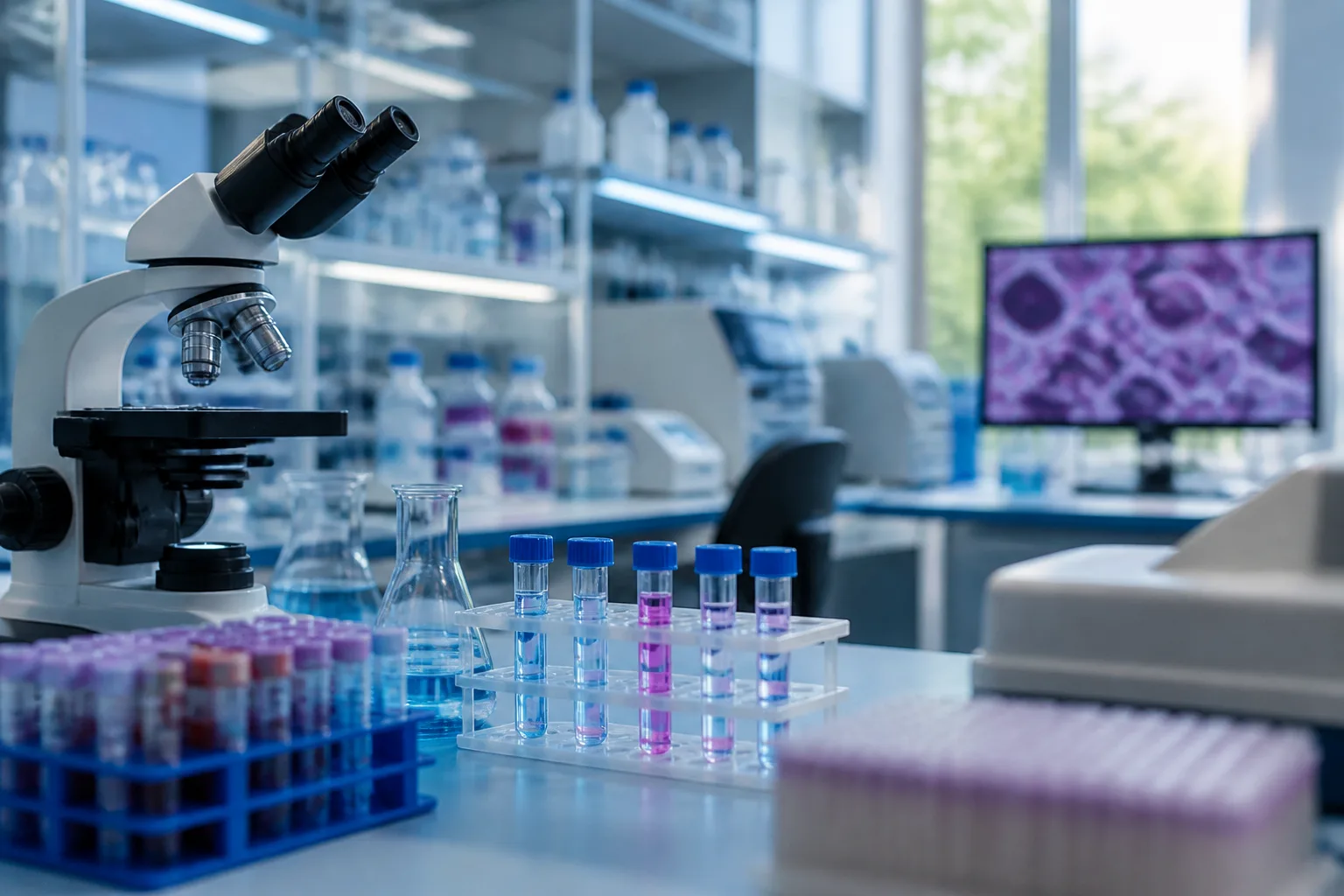
Andalusia’s public health system currently has 1,993 active cancer research projects and studies. The work aims to investigate the disease and open up new treatment options. First Vice-President and Minister of the Presidency, Health and Emergencies Antonio Sanz highlighted the importance of this activity on World Cancer Research Day, observed on September 24.
Sanz said that since 2019, investment in oncology equipment in Andalusia had increased sixfold, or 426% compared with the previous period. The number of specialist professionals had grown by 30%, he said, adding that Andalusia is among the regions with the highest number of clinical trials. He also cited CAR T-cell therapies for patients with blood cancers, the addition of TTFields devices for brain tumours to the health service’s portfolio, and plans for proton therapy centres in Seville and Málaga.
Andalusia has 196 competitive research projects under way, with funding secured totalling €28,997,731. The projects are being carried out at healthcare and research centres linked to the region’s public health system in all its provinces, according to figures from the Fundación Progreso y Salud, an organisation overseen by the regional health ministry.
There are also 1,797 active clinical studies: 1,433 clinical trials, 321 observational studies and 43 clinical investigations involving medical devices. Early-phase trials account for 49.4% of clinical trials. These studies require more complex quality and safety measures and facilities. Phase I and II trials assess the effectiveness and safety of new medicines, including studies in which a medicine is administered to humans for the first time.
Across the health system, 22% of active competitive research projects and 43% of current clinical studies are related in some way to cancer. Sanz described the disease as “one of the main public health problems we face in public health systems.” The research is intended to advance understanding of cancer and the treatment options available to patients. It is also highly collaborative, involving different public healthcare centres.
The Andalusian centres most involved in cancer-related clinical studies are Hospital Universitario Virgen del Rocío, Hospital Universitario Regional de Málaga, Hospital Universitario Virgen de la Victoria, Hospital Universitario Virgen Macarena and Hospital Universitario Reina Sofía.
One project singled out for its scope and funding is a study of how centralising pathology diagnosis and applying precision medicine strategies affect sarcomas. The Spanish Association Against Cancer has awarded it more than €1.5 million. The project, conducted at Hospital Regional Virgen del Rocío/IBIS and led by Enrique de Álava Casado, addresses the challenge of improving diagnosis and tailoring treatment to the characteristics of each patient with a soft-tissue sarcoma. It examines how centralised pathology diagnosis and precision medicine strategies affect prognosis and treatment, with the aim of developing more consistent diagnostic criteria and ultimately improving patient survival.