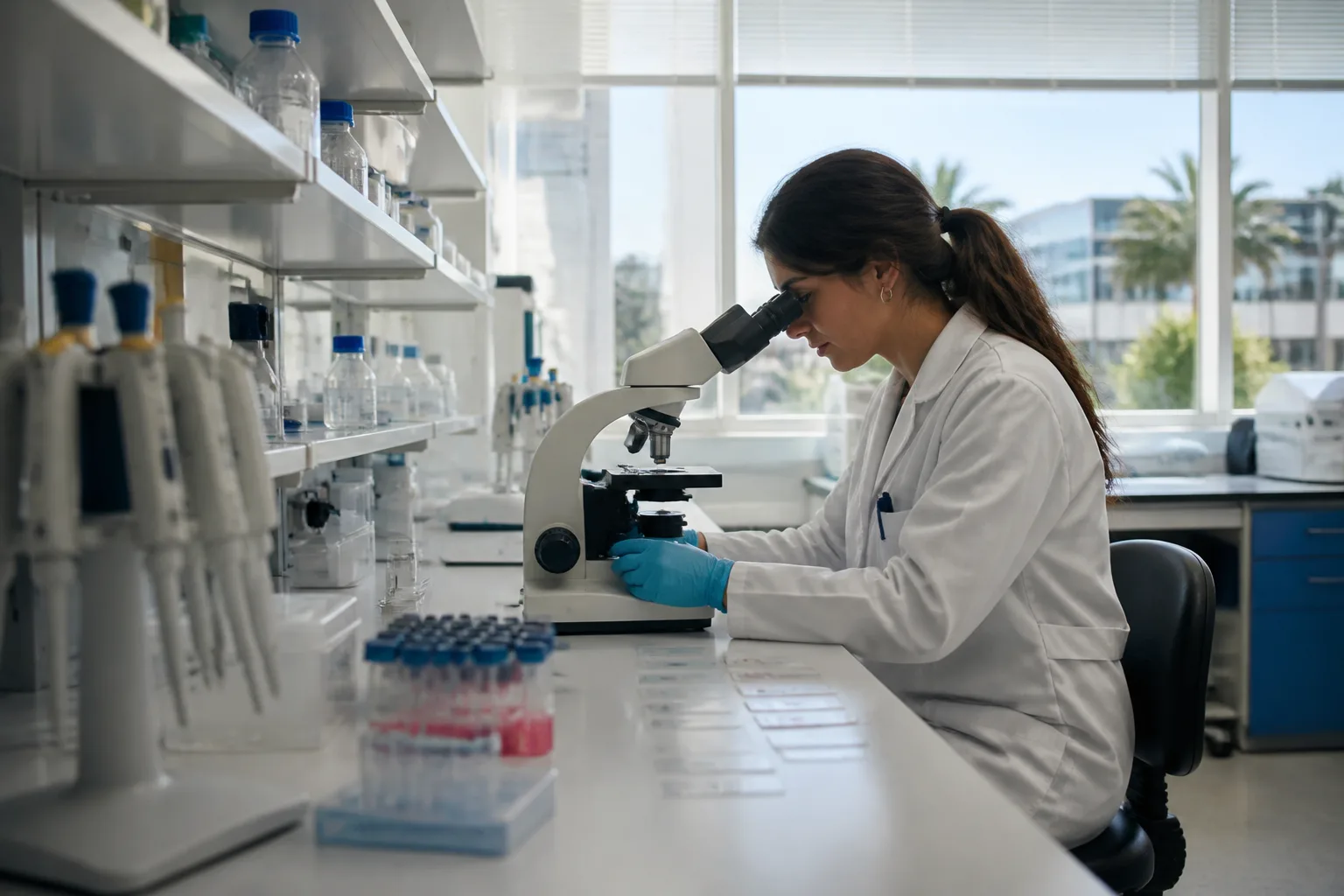
The Institute for Biomedical Research of Málaga and Nanomedicine Platform (IBIMA Plataforma BIONAND) presented its 2025 Scientific Report at an institutional event at its TechPark Málaga headquarters. The report highlighted growth in scientific activity, clinical research and institutional capacity. During 2025, the institute secured more than €37 million for health research—€5 million more than in the previous year—had 388 active competitively funded projects, contributed to 951 scientific publications and conducted 1,550 clinical studies, 20% more than in 2024.
The event brought together representatives from health and university authorities, healthcare centres linked to IBIMA, the University of Málaga, patient associations and the research community. The institute’s scientific director, Francisco J. Tinahones, said the results reflected growth in scientific capacity, competitiveness, knowledge transfer and engagement with society. He said the challenge was to turn that growth into excellent research and improvements in people’s health.
The report described 2025 as an important year for institutional consolidation. The addition of Costa del Sol University Hospital expanded IBIMA’s multidisciplinary, collaborative model and added clinical and scientific capacity. The institute also had its accreditation as a Health Research Institute renewed for five years.
IBIMA comprised 1,602 professionals: 1,383 researchers, 178 technical support staff and 41 management professionals. Its scientific structure included 91 research groups. Alongside the 388 active projects, the institute obtained funding for 61 new projects during the year.
International funding included €3.5 million from European calls, support for ten new projects and a second European Research Council Starting Grant linked to IBIMA. Its groups also participated in ten RICORS networks, 34 COST Actions, seven CIBER groups and four platforms of the Carlos III Health Institute.
Of the 951 publications involving IBIMA researchers, 88% appeared in first- or second-quartile journals (Q1 or Q2), and IBIMA researchers led 55% as first, last or corresponding authors. The institute’s cumulative impact factor reached 3,322 points.