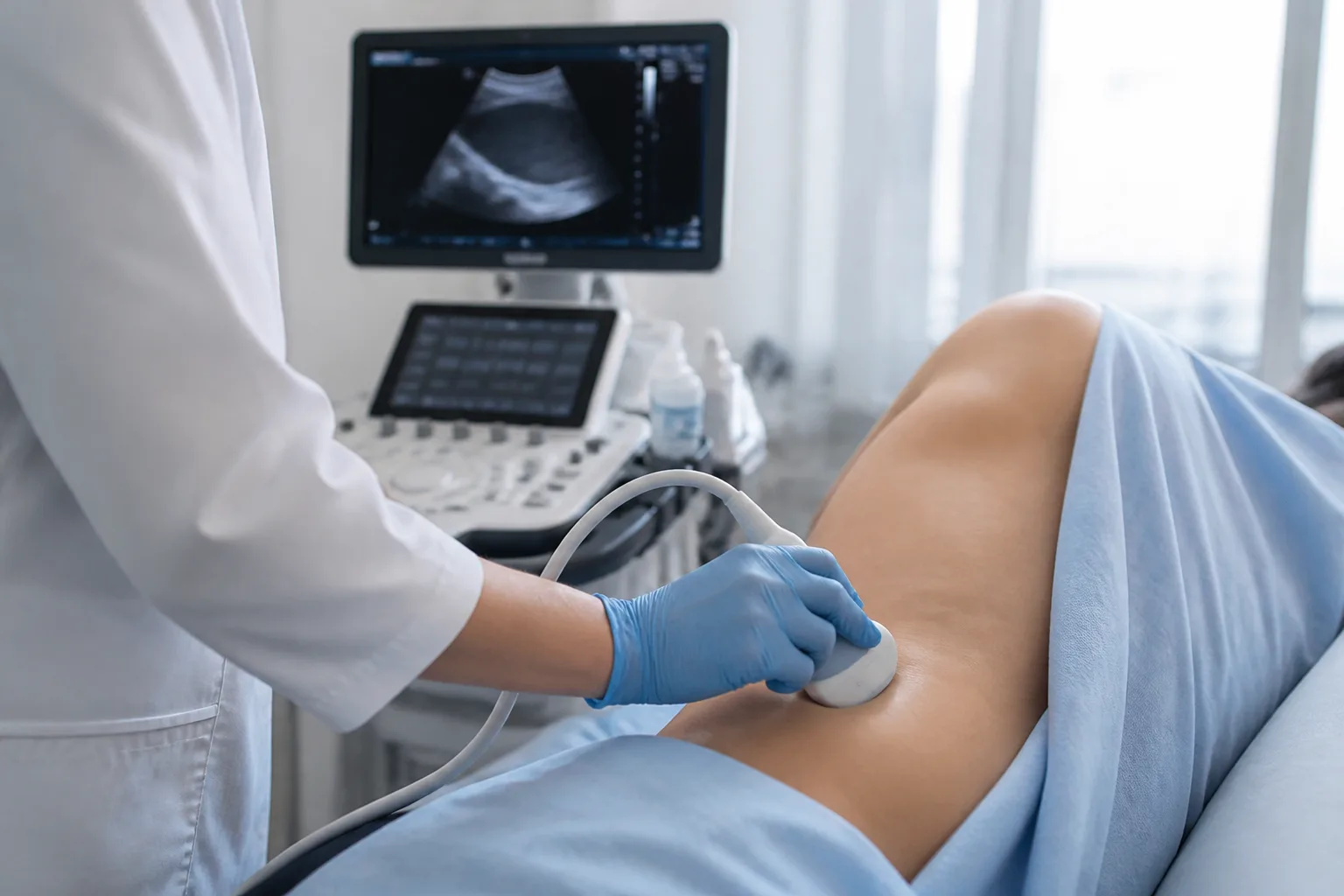
The Regional University Hospital of Málaga has received a research grant from the Official College of Physicians of Málaga for a project aimed at improving the early diagnosis of malignant pleural effusion using chest ultrasound. The work will be carried out jointly by the hospital’s Interventional Pulmonology Unit and Medical Oncology Department.
The project will validate the PMUS-8 model, an ultrasound scale based on eight parameters. Its aim is to provide an objective, reproducible tool that can be readily used in clinical practice to estimate early on whether a pleural effusion is likely to be malignant, helping speed up diagnosis and support more precise decisions.
Pleural effusion is among the most frequent conditions treated in pulmonology and is a common cause of hospital admission. An estimated 20% to 25% of pleural effusions are malignant. Distinguishing them early from benign effusions is important to guide treatment, reduce time to diagnosis and avoid unnecessary invasive procedures.
Chest ultrasound can identify signs suggestive of malignancy, but there is currently no validated ultrasound scale that brings these findings together objectively and provides a standardized estimate of risk. The project seeks to address this gap by validating PMUS-8 to improve the initial assessment of patients with pleural effusion.
The hospital said the grant will support work toward a more precise diagnostic model, with the aim of identifying patients at higher risk of cancer earlier, optimizing decisions about invasive tests and improving the use of healthcare resources. The project is also intended to strengthen the role of chest ultrasound in the initial assessment of pleural disease.
Pulmonology department head Antonio Dorado said the grant recognizes the joint work of professionals involved in diagnosing patients with suspected cancer. He said the goal is to validate a simple, reproducible tool that can be readily applied to identify malignant pleural effusions early and support a faster, coordinated diagnostic process involving pulmonology, oncology and other specialties.
The hospital’s Interventional Pulmonology Unit is endorsed by the Spanish Society of Pulmonology and Thoracic Surgery (SEPAR) as a specialized unit meeting excellence criteria in interventional pulmonology.