A research project led by the University of Málaga (UMA), in collaboration with the Technical University of Madrid, developed a system to improve electrical current quality and reduce energy losses in motors used in electric mobility and aviation. The project was funded by the regional Department of Universities, Industry, Energy and Innovation. The method is intended to optimize energy use and extend operating range, allowing a vehicle to travel farther on the same battery.
The study focuses on multiphase electric motors, which can have five, six, nine or more electrical phases, unlike most industrial motors, which are three-phase. They are used in electric and hybrid vehicles, aircraft and advanced industrial applications, including generators and high-speed elevators. While these motors can offer greater efficiency, power distribution and fault tolerance, their control is more complex because it involves more variables.
The research, titled “Multivector model predictive control for multiphase induction machines with dead-time knowledge,” was published in Scientific Reports, part of Nature Portfolio. It addresses the effect of “dead time”: a brief interruption required in electronic converters to prevent short circuits, but one that can cause electrical distortion and reduce system performance.
The researchers refined a technique called model predictive control, which anticipates the motor’s future behavior and selects an appropriate control action at each moment. Their algorithm, called Dead-Time Influence Estimation Model Predictive Control (DIE-MPC), estimates and compensates in real time for the effect of dead time. Co-author Mario Durán of UMA told the Descubre Foundation that the algorithm helps improve current quality and mitigate parasitic currents that do not produce useful energy. He said the additional information allows the system to make more precise decisions and reduce currents associated with energy losses, heat and vibration.
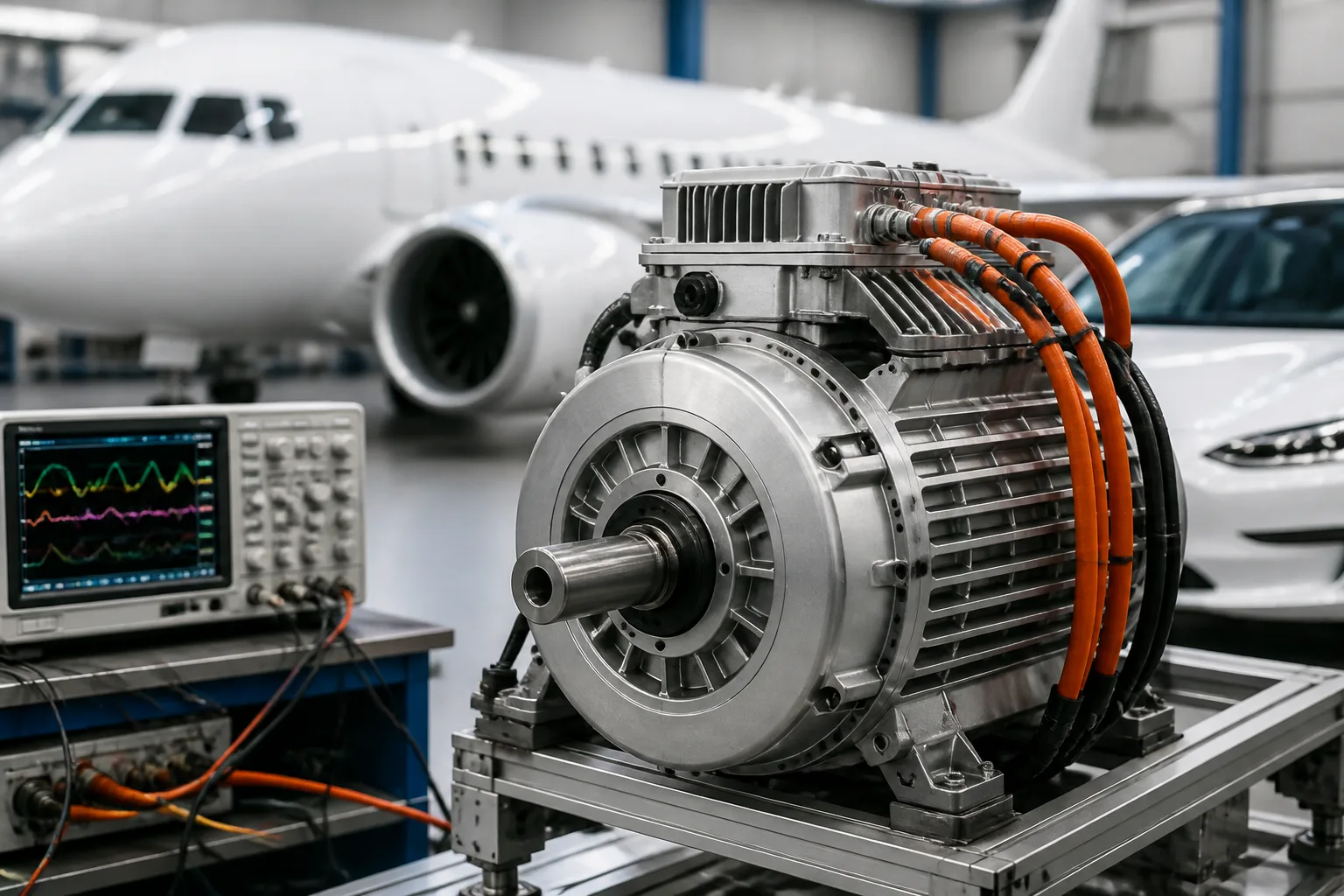
The team tested the method on a rig in UMA’s Department of Electrical Engineering, designed to emulate a vehicle propulsion system. It consisted of a six-phase propulsion motor coupled to another motor that simulated wheel resistance. Both were controlled by a microcontroller programmed using a computer.
At a control frequency of 20 kilohertz, the tests found that the method reduced non-productive current harmonics by up to 31.7% and cut total current-quality distortion by nearly 50% compared with conventional strategies. Some current harmonics that distort the ideal signal fell by more than 50%. The researchers also reported that the improvements held across a range of operating conditions, including different speeds, dynamic load changes and errors in motor-model parameters. Co-author Ignacio González said the results indicate the algorithm’s robustness and its potential to reduce current distortion and energy losses.
The study also received funding from Spain’s National Research Plan, through the Ministry of Science, Innovation and Universities.