In a presentation to the Andalusian Parliament’s Committee on Culture, Historical Heritage and Sport, regional minister Patricia del Pozo set out her department’s priorities for the new legislative term. These include modernising cultural and sports infrastructure, protecting heritage, supporting cultural and sports sectors, and transforming Andalusia’s sports system.
Del Pozo said the regional budget for culture and sport had risen 20%, from €279.8 million in 2018 to €336.6 million in 2026. She also cited more than €25 million in grants and programming support for creative sectors. According to figures she presented, cultural employment has grown 57% to 88,100 workers, while the number of businesses in the sector has risen 55% to nearly 40,000.
Planned cultural infrastructure projects include putting the former Bank of Spain building in Huelva out to tender for conversion into a museum; opening Seville’s 15th-Century Pavilion as the permanent collection venue for the Andalusian Centre for Contemporary Art; expanding Seville’s Museum of Fine Arts; and moving Córdoba’s Museum of Fine Arts to the former Provincial Library. The plans also include completing the Andalusian Flamenco Museum in Jerez de la Frontera, reopening Seville’s Archaeological Museum after a full renovation, providing a new home for the Andalusian Library and advancing the relocation of Granada’s Museum of Fine Arts.
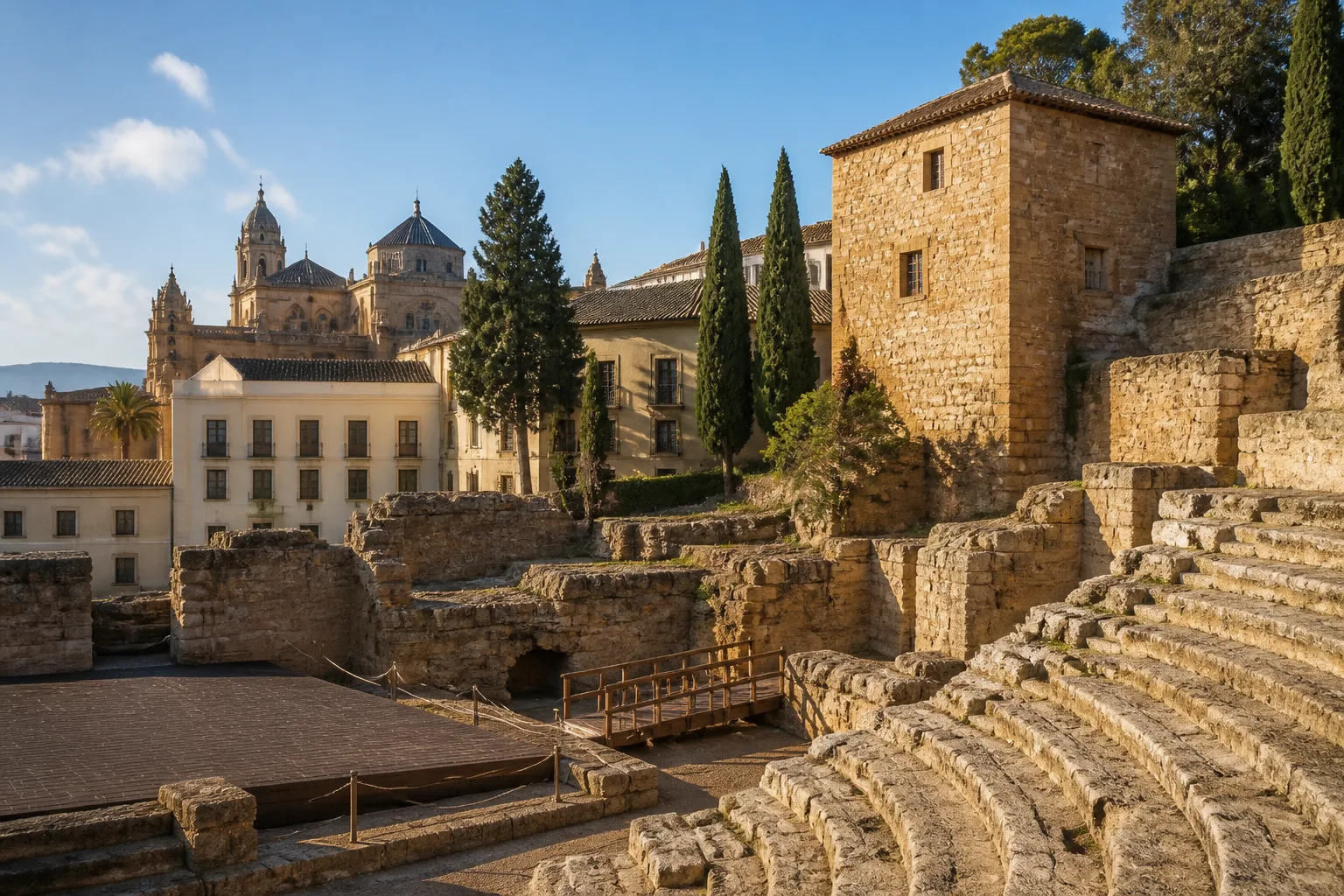
The department will continue heritage work at sites including the Roman theatres in Cádiz and Málaga, San Isidoro del Campo monastery in Santiponce, Almería’s Alcazaba, Vélez-Blanco castle, and the archaeological sites of Carmona, Itálica and Madinat al-Zahra. It will also implement Andalusia’s new Cultural Heritage Law, approved by the regional parliament in March, including new regulations, heritage and inspection plans, a general heritage register and an information system.
Del Pozo said the government would bring forward a strategy to coordinate existing cultural programmes for children and young people, with the aims of widening school access, encouraging participation from an early age and strengthening pathways for young creators. New digital-culture initiatives are planned in areas such as cultural video games, immersive experiences, interactive documentaries, podcasts, digital art and the use of artificial intelligence in cultural creation.
For flamenco, planned measures include grants for national and international tours and phonographic production, as well as a regional flamenco register. The department also intends to strengthen support for flamenco clubs and municipalities.
In sport, the government plans to approve a 2027–2034 strategic plan and pursue a strategy to attract national and international sporting events. Del Pozo also cited projects for sports facilities in several locations, and improvements to Seville’s La Cartuja Stadium ahead of the 2030 World Cup. She said €20 million had been invested in the stadium and that further improvements to facilities, services, sustainability and the spectator experience would require investment shared by the institutions that own the stadium company.
Del Pozo reported that since 2019, 2,995 people had been exhumed in connection with democratic memory work, and DNA had been analysed from 4,375 victims and 2,939 samples from relatives. She said the regional government hoped the parliament would approve a new Law of Concord to support exhumation and identification work.