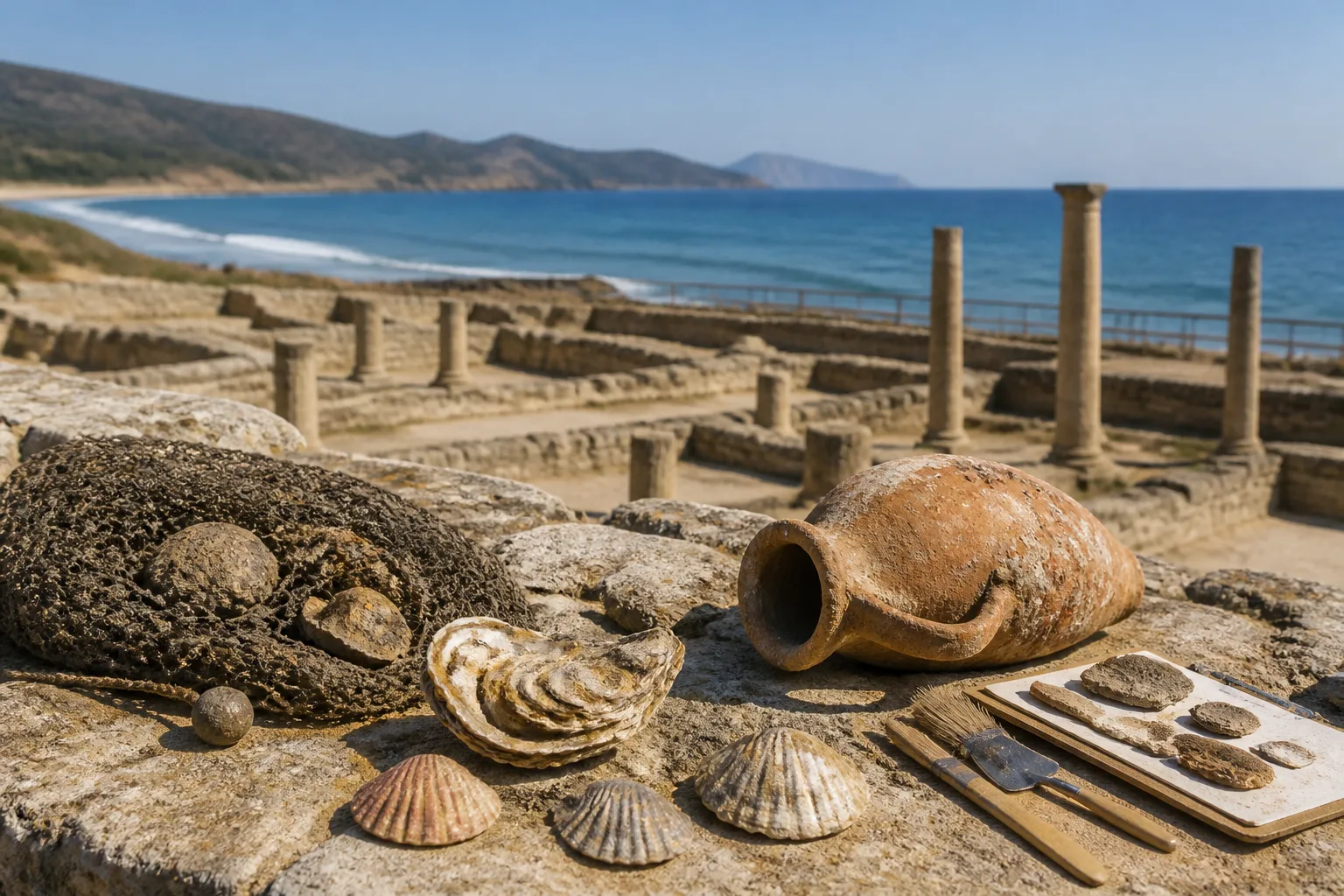
The Andalusia Regional Government’s Department of Culture, Historical Heritage and Sport is holding the third Conference on Andalusia’s General Archaeological Research Projects at the Provincial Historical Archive of Cádiz. The event will present recent progress on four projects at the Lentejuela necropolis in Teba, Málaga, and at the sites of Los Millares in Santa Fe de Mondújar, Almería, and Baelo Claudia in Tarifa, Cádiz. Research at Baelo Claudia examines both the use of marine resources and the city’s logistics.
The conference aims to share the projects’ latest findings and hypotheses with the public, as part of efforts to protect and pass on Andalusia’s cultural heritage. The event is free to attend with advance registration and will also be streamed. The four projects were selected from 38 active projects at Andalusian archaeological sites and complexes, based on their interest, relevance and stage of development.
Regional Culture Minister Patricia del Pozo said the event, held on the third Thursday of September each year, had become an established fixture because of its ability to connect science with high-level public outreach. She said that, until the department changed its approach in 2024, information about these projects had generally been shared through specialist channels aimed at academic and university audiences. Del Pozo said the initiative reflected the quality of archaeological research in Andalusia and the importance of sharing its results so the public can understand the need to protect, preserve and pass on the region’s heritage.
Two projects at the Roman city of Baelo Claudia will be presented. One, led by University of Cádiz archaeology professor Darío Bernal Casasola, is bringing together archaeological research on the use of marine resources. It is also developing experimental archaeology to recreate ancient fish sauces known as garum. The other, led by University of Seville archaeology professor Oliva Rodríguez Gutiérrez, examines the ancient city and the systems used to meet residents’ needs. It is based on the hypothesis that the city operated according to basic principles of reusing and making use of products and materials, and involves Spanish and international institutions.
At Los Millares, a Copper Age settlement dating to the third millennium BCE, researchers are focusing on residential areas and funerary spaces. Earlier work at the site has examined its defensive system, which comprises four concentric walls and 13 forts. The current project is led by University of Granada professor Juan Antonio Cámara Serrano and Alberto Dorado Alejos, also of the university.
Research at the Lentejuela necropolis, co-directed by Serafín Becerra and Eduardo Vijande, aims to improve understanding of the site’s monumental structures, their chronology and their function. The necropolis, in the municipality of Teba, has 12 dolmens spread over more than six hectares, making it the largest concentration of megalithic structures in Málaga province.
Anyone interested in the latest research under Andalusia’s General Archaeological Research Programmes may register by emailing asiste@pgiandalucia.es. The conference will be streamed online and will include a sign-language interpreter. Previous editions were held at the Iberian Museum in Jaén in 2024 and the Málaga Museum in 2025.