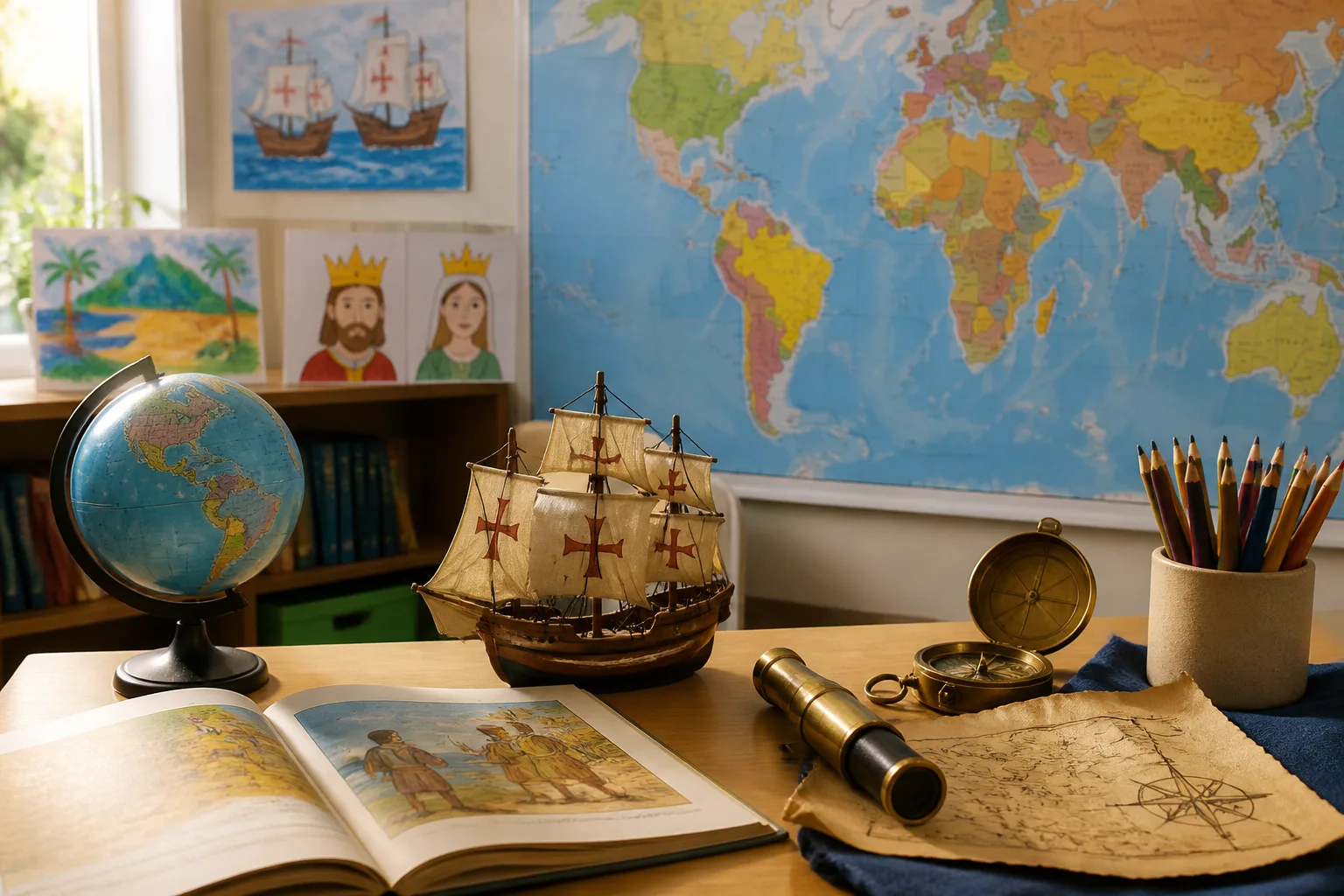
Andalusian students marked Hispanic Day on 12 October through activities related to art, reading, music, history and Hispanic heritage. The regional government’s Governing Council took note of the Education Department’s preparations, which included making resources available to schools through its website. Schools chose activities within their own educational projects, with the stated aims of supporting students’ development and encouraging engagement with cultural diversity and historical heritage.
Suggested resources included interactive puzzles and materials from the Averroes Blog classroom project “1492: A New World,” documentaries such as “Magellan and the First Circumnavigation of the World, 1519–1522,” the children’s series “The Amazing Adventure of Zamba,” and films including Carlos Saura’s “El Dorado” and Ridley Scott’s “1492: Conquest of Paradise.” Suggested reading included Elisabetta Dami’s “The Discovery of America,” from the Geronimo Stilton series, and Henry Kamen’s “A Short History of the Discovery of America.” The department also pointed to the UNESCO Courier article “Rediscovering 1492,” which it described as a resource for critical reflection on the historical, cultural and social processes that followed.
An instruction issued for the 2026–27 school year sets out a framework for marking dates on the school calendar, including Hispanic Day. School leadership and teaching teams may include voluntary extracurricular and complementary activities in their educational projects and programmes.
Activities in early childhood and primary schools included art workshops on the Catholic Monarchs at CEIP Madre de la Luz in Almería; a play about the arrival in America at CEIP La Dehesilla in Sanlúcar de Barrameda, Cádiz; and videos and classroom discussions at CEIP Las Viñas in Bollullos Par del Condado, Huelva. Students at CEIP Torrijos in Alhaurín de la Torre, Málaga, made an exhibition of summaries and drawings based on historical documentaries. CEIP Juan Ramón Jiménez in Seville hosted the filming of an institutional commemorative video.
Secondary schools also took part. IES Aljanadic in Posadas, Córdoba, ran research projects on the spread of Hispanic culture in collaboration with Instituto Cervantes centres in South America. IES Cerro de los Infantes in Pinos Puente, Granada, held reading activities, while students at IES Salvador Serrano in Alcaudete, Jaén, studied and mapped Christopher Columbus’s routes.
Specialist schools held artistic, musical and language activities. These included work on Hispanic culture with foreign students at the Official School of Languages in El Ejido, Almería, and a study of words of American-language origin at the Granada school. Music conservatories also participated: Cádiz’s Manuel de Falla Professional Conservatory planned a festival of Spanish and Andalusian music as part of Falla Year 2026; Córdoba’s Superior Conservatory and Rafael Orozco Professional Conservatory, with the Miguel Castillejo Foundation, presented a concert of Latin American art and popular music. The Javier Perianes Professional Conservatory in Huelva took part in cultural events at La Rábida from 10 to 12 October. Osuna’s Professional Conservatory in Seville scheduled a concert by its band and choir for 30 October as part of the fourth October Hispano-American festival.
The regional government said the historical process commemorated by Hispanic Day is covered in Andalusia’s curricula across general and specialist education. It describes the date as marking the start of Spain’s linguistic and cultural projection beyond Europe, and says Andalusian ports of departure and arrival contributed to cultural, social and linguistic ties. The release also notes the presence of Andalusian phonetic, lexical and grammatical features in the diverse Spanish spoken in the Americas.