Almería, Cádiz and Málaga were the provinces most affected by Storm Adam, the regional government said in an announcement dated October 20, 2026.
Antonio Sanz, the Junta de Andalucía’s first vice president and minister for the Presidency, Health and Emergencies, announced that the Emergency Plan for Flood Risk in Andalusia had been deactivated following improving conditions and the end of adverse weather alerts in all eight provinces. The 112 Andalucía emergency service managed 696 incidents linked to rain and wind since the storm began on Saturday.
Sanz said the weather had improved overnight and that there were no adverse weather alerts in any Andalusian province. He said the previous evening and night had been quiet, with about 20 incidents late in the evening and none during the early hours. Rainfall was also limited.
Almería recorded the most emergencies, with 180, followed by Cádiz with 156 and Málaga with 154. Together, the three provinces accounted for 490 incidents, more than 70% of the total. The remaining figures were 84 in Seville, 62 in Granada, 43 in Córdoba, 12 in Jaén and five in Huelva.
Most reports involved natural hazards: 451 incidents, mainly flooding and waterlogging. Emergency services also handled 74 disruptions to basic services, 46 rescues, 43 traffic incidents, 34 collapses or falling objects, 13 road accidents, two medical emergencies and 33 incidents of other kinds.
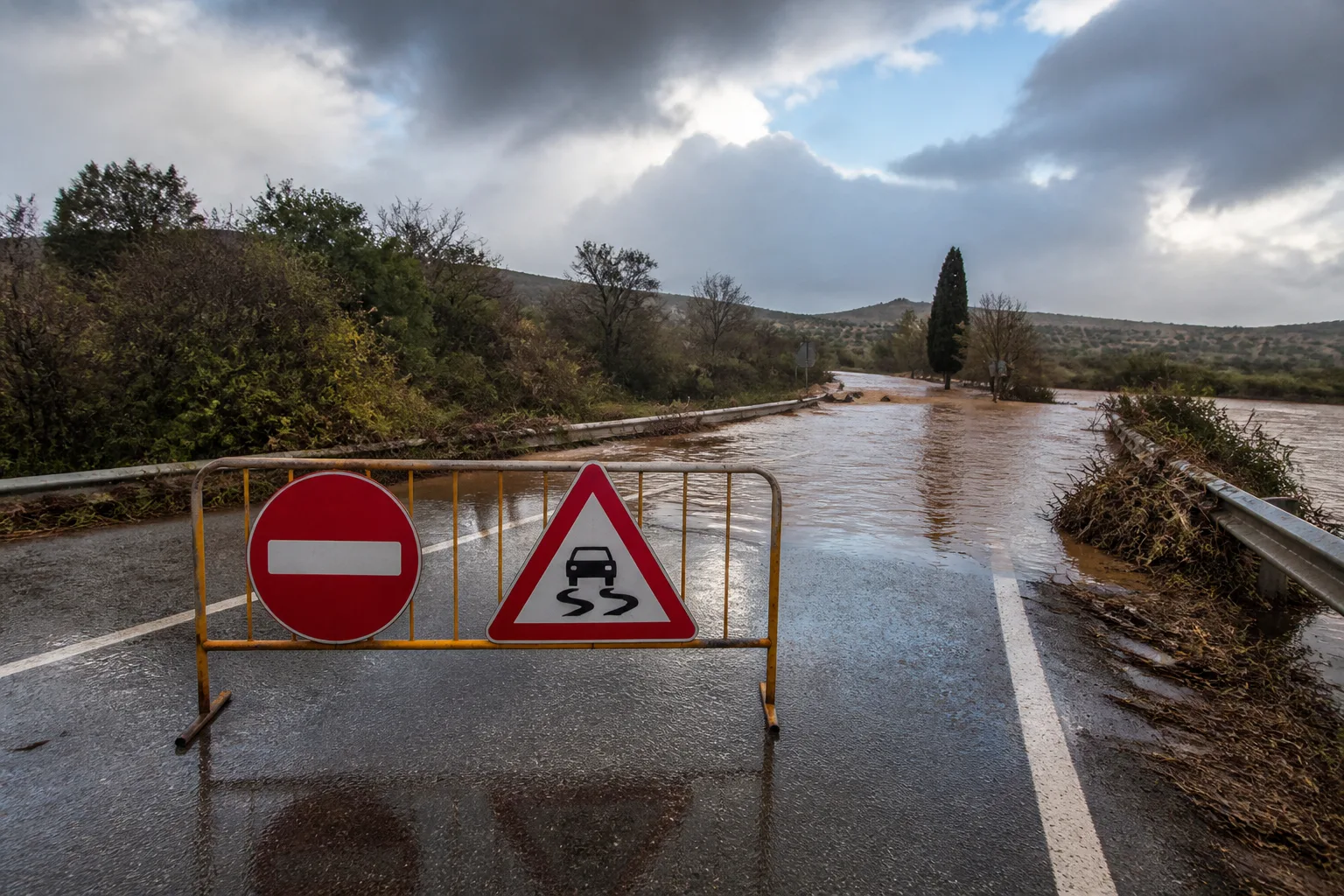
Two roads in Córdoba province remained affected, with three sections closed. On the CO-4103, traffic was still interrupted between kilometres 0 and 13, between Bujalance and Villa del Río. On the CO-4207, a section between kilometres 0 and 9.1 remained closed between Montilla and Montalbán de Córdoba, including the La Zarza bridge between kilometres 5 and 6. Traffic had been restored on the SE-6300 through Lebrija, Seville, where a section between kilometres 0 and 6 had been closed the previous day.
The highest rainfall totals during the early hours were recorded in Vejer de la Frontera, Cádiz, at 7.4 litres per square metre; Villarrodrigo, Jaén, at 2.6; Villanueva del Arzobispo, Jaén, at 1.6; and Córdoba-Prágdena, at 1.2.
Sanz thanked residents for cooperating and following the self-protection recommendations issued by the Andalusian Emergency Agency, including guidance shared on social media and through two ES-Alert messages sent to people in Almería province. The agency said people should remain cautious where impacts persist and obey signs on closed roads.