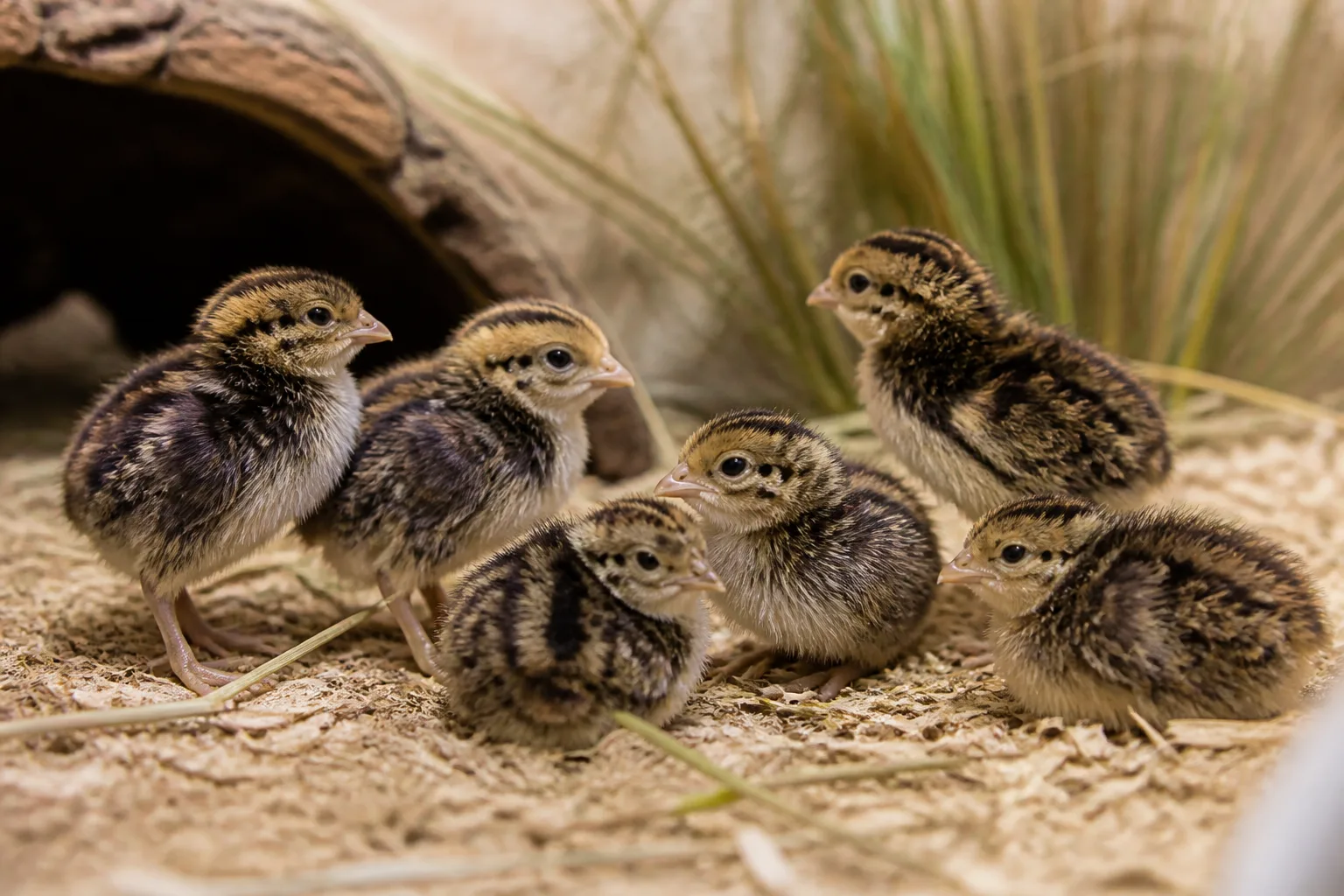
The Biodiversity Conservation Centre at the Zoobotanical Centre of Jerez, in Jerez de la Frontera, Cádiz, has recorded the first Andalusian buttonquail chicks born under the reintroduction programme being carried out in the region. The six chicks hatched from the first clutches laid by two females among 18 birds brought from Morocco last September. A seventh egg remains in an incubator and is developing favourably.
The ex situ breeding programme for the Andalusian buttonquail (Turnix sylvaticus sylvaticus), which is extinct in Spain, is described as one of the most significant wildlife conservation initiatives in the international context. The Andalusian regional government’s Department of Sustainability and Environment is working on it with other administrations, scientific institutions and specialist organisations in Spain and Morocco.
The 18 founding birds adapted well to their facilities at the Jerez centre. Within about a month and a half of arriving, two females laid their first clutches: four eggs in one enclosure and three in another. All seven eggs were artificially incubated under temperature and humidity conditions adjusted to the species’ needs. Centre staff monitored embryo development by candling, checking the eggs twice a week. They also took biometric measurements and kept samples for future research into the species’ reproductive biology and to help refine care protocols.
The first six eggs hatched successfully without intervention between the early hours of Sunday, October 11, and the afternoon of Monday, October 12. The chicks are developing favourably and have been moved to a brooder, where temperature and humidity are controlled. Temperature is lowered gradually, by about 0.5°C per day, depending on each chick’s age and progress. Each chick has an identification ring so staff can track its growth and development. These records are also used to support genetic management, plan future pairings and monitor inbreeding.
During their first days, the chicks are fed every 30 minutes, with staff recording how many food items each one consumes. Their diet initially consists mainly of mealworm larvae and small crickets. Other foods, including canary seed mix, insectivore bird feed, carrot, leafy greens and millet, are introduced as they grow.
The 18 adult birds are also monitored daily. Their enclosures have areas of sun and shade, shelters and, at night, 250-watt heat lamps. Cameras in some enclosures and in the incubation and chick areas allow staff to observe the adults, monitor hatching and follow the chicks’ progress. Daily observations include behaviour such as sand bathing and singing, and help staff identify whether birds are uncomfortable in a particular enclosure or group.
The programme aims to establish a stable breeding population in Jerez, with offspring potentially used in future in situ conservation and reintroductions at selected sites along the Andalusian coast. At least four further collection campaigns in Morocco are planned over the coming years to build a sufficiently large breeding group with as much genetic diversity as possible. A second ex situ conservation group has been established at Aïn Sebaâ Zoological Park in Casablanca; it will be managed in coordination with Jerez, where the captive population’s studbook will be centralised.
The only confirmed wild population survives at a site on Morocco’s Atlantic coast, associated with traditional farms and market gardens. It numbers a few hundred birds, and recent records indicate a declining trend. The species once occupied a much wider area of the Mediterranean basin but disappeared from the rest of its historic range. Coastal urbanisation and agricultural intensification during the 19th and 20th centuries are among the causes of its decline.