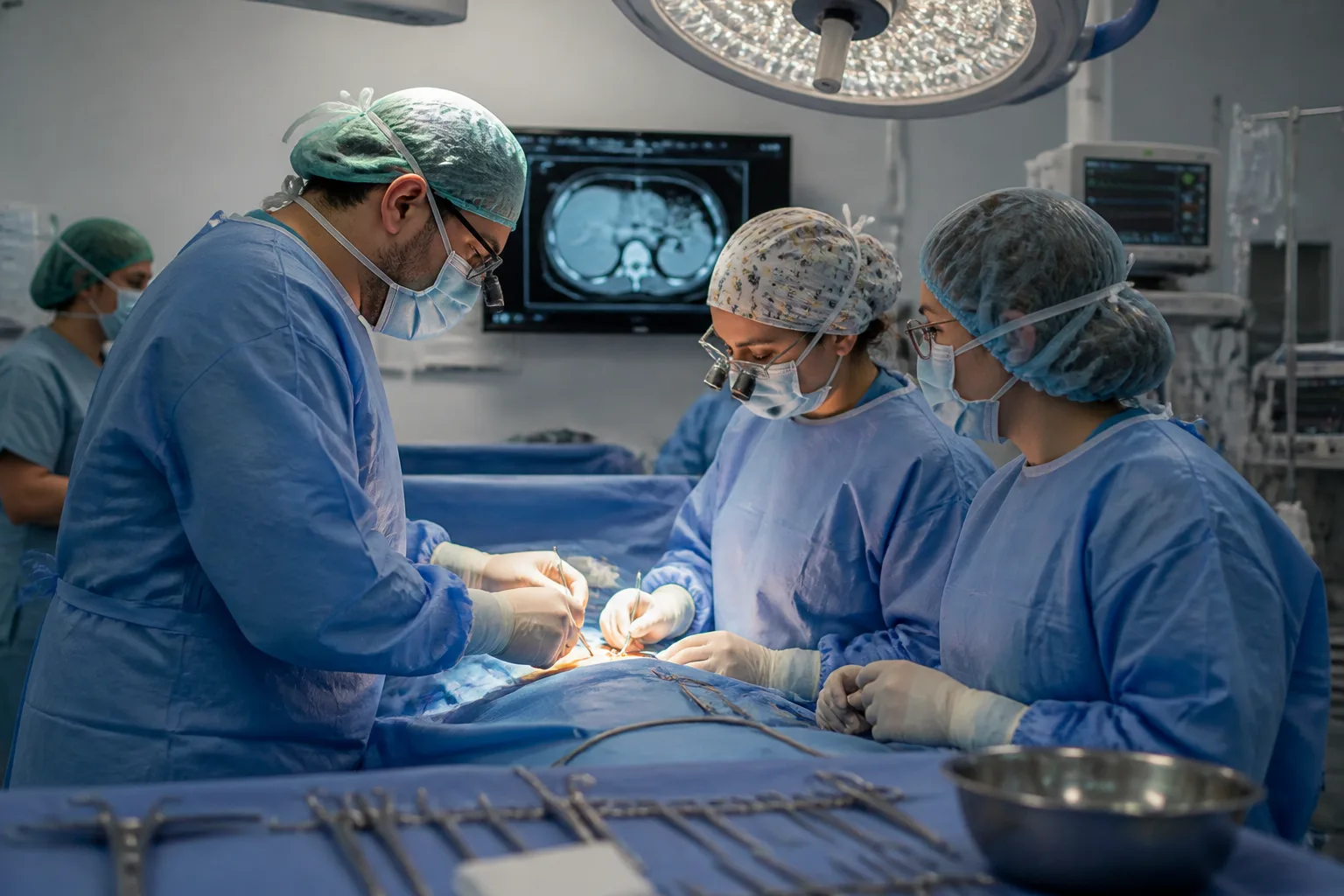
The Hospital Universitario Virgen del Rocío has had a new UPRA (Reference Units and Procedures of the Andalusian Health Service) in general and digestive surgery since September. The unit, “Complex pancreatic cancer surgery with vascular resections,” is coordinated by Dr Javier Padillo, head of the hospital’s General Surgery Unit. The hospital is part of the Andalusian Health Service (SAS), under the Andalusian regional government’s Department of the Presidency, Health and Emergencies.
The unit is intended to offer a surgical option to selected patients with locally advanced pancreatic cancer that has invaded the mesenteric vein or artery. In some cases, the tumour can be removed and the affected vessels reconstructed, potentially providing an option for patients who might otherwise be ruled out for surgery because of the complexity of the vascular involvement, Padillo said. The hospital’s surgeons have developed advanced vascular reconstruction techniques for these procedures.
Dr Miguel Ángel Gómez, section head in the Hepatobiliary and Transplant Surgery Unit, said the team’s experience in cancer surgery and in pancreas, liver and intestinal transplants had helped it develop the technical skills needed for vascular procedures in pancreatic cancer. The programme also draws on a multidisciplinary tumour committee, including oncologists, radiologists, digestive-disease specialists, anaesthesiologists, intensive care staff and nurses. The committee assesses each patient and decides whether to proceed with these complex operations.
Dr Inmaculada Gallego, the oncologist responsible for these patients on the committee, said patients should be referred to the Virgen del Rocío committee if surgery is not initially considered an option, or if their response to neoadjuvant chemotherapy is assessed at another centre. The committee can then identify patients who might benefit from complex surgery and consider an additional treatment option.
Pre-operative assessment is extensive. Some patients need advanced endoscopic procedures before surgery, said Dr Francisco García, section head of Digestive Medicine’s Endoscopy Service. Radiologist Dr Heminia Pérez said the team must establish the extent of vascular involvement precisely so surgeons can plan the operation. The hospital uses conventional radiology alongside digital tools and artificial intelligence, including Cella 3D reconstructions, to map patients’ vascular anatomy. These create a digital twin that can help surgeons plan and guide the operation, with the aim of improving safety.
Padillo said the team combines its accumulated experience and newer technologies to undertake these complex procedures, which carry risks.