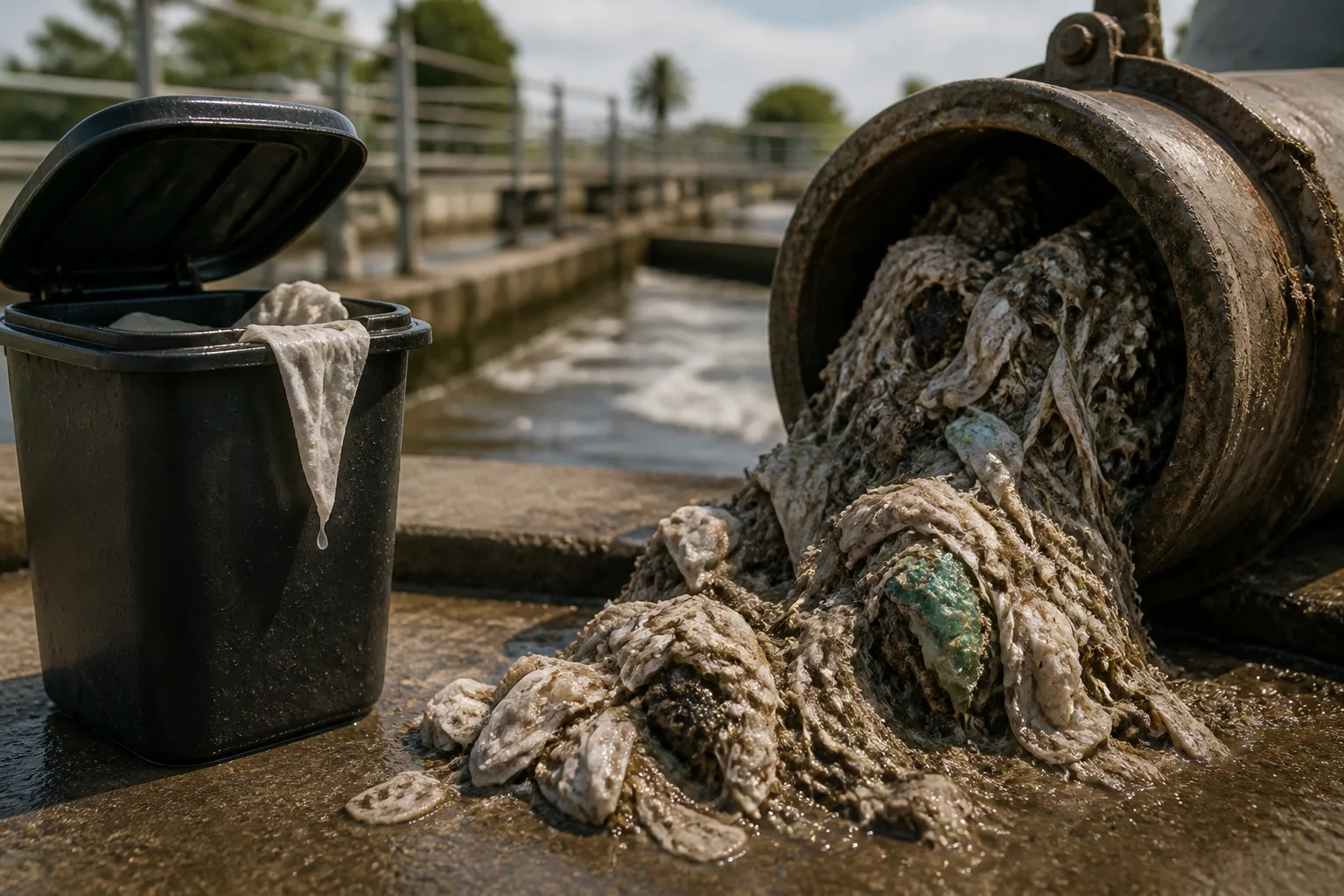
Málaga’s municipal water company, Emasa, has launched a public awareness campaign asking residents not to flush wet wipes or other solid waste down the toilet. Its message is simple: put wipes in the bin instead.
The campaign was announced on 5 June, World Environment Day, under the title ‘The toilet’s crime: the wet wipe, a repeat offender’. It uses the style of a police investigation to draw attention to the blockages, breakdowns and waste caused by items entering the sewer network.
Emasa removed 2,345 tonnes of solid waste from Málaga’s wastewater during the previous year, according to the city council. Most of the discarded hygiene products were wet wipes, although the material also named cotton buds and sanitary pads.
These items can cause problems throughout the wastewater system, affecting the pipes and equipment used to carry and treat sewage. Emasa says the waste also creates environmental concerns and increases the cost of sanitation and treatment.
Cleaning and removing solid waste from the sewer network, pumping stations and treatment plants, and transporting it to the Los Ruices Environmental Centre costs Emasa €1.9 million a year. The figure does not include additional investment to reduce the amount of solid waste in the system.
The campaign presents residents as detectives following clues to solve a case involving waste and faults in the network. Its slogans include ‘The wet wipe. A repeat offender’, ‘Water analysis confirms the crime’ and ‘Pipes don’t lie’. The investigation ends with the instruction to put wipes in the bin.
The message will appear on several city communication channels, including EMT buses, radio, social media, digital news outlets, street advertising panels, digital screens and urban clocks. Emasa also plans to publish the full campaign investigation on its website and social media accounts.
The council is asking residents to help reduce the amount of rubbish entering the sewer system. Keeping wet wipes and other solid waste out of toilets can help limit blockages and equipment faults, while reducing the work and expense involved in clearing the network and treating wastewater.