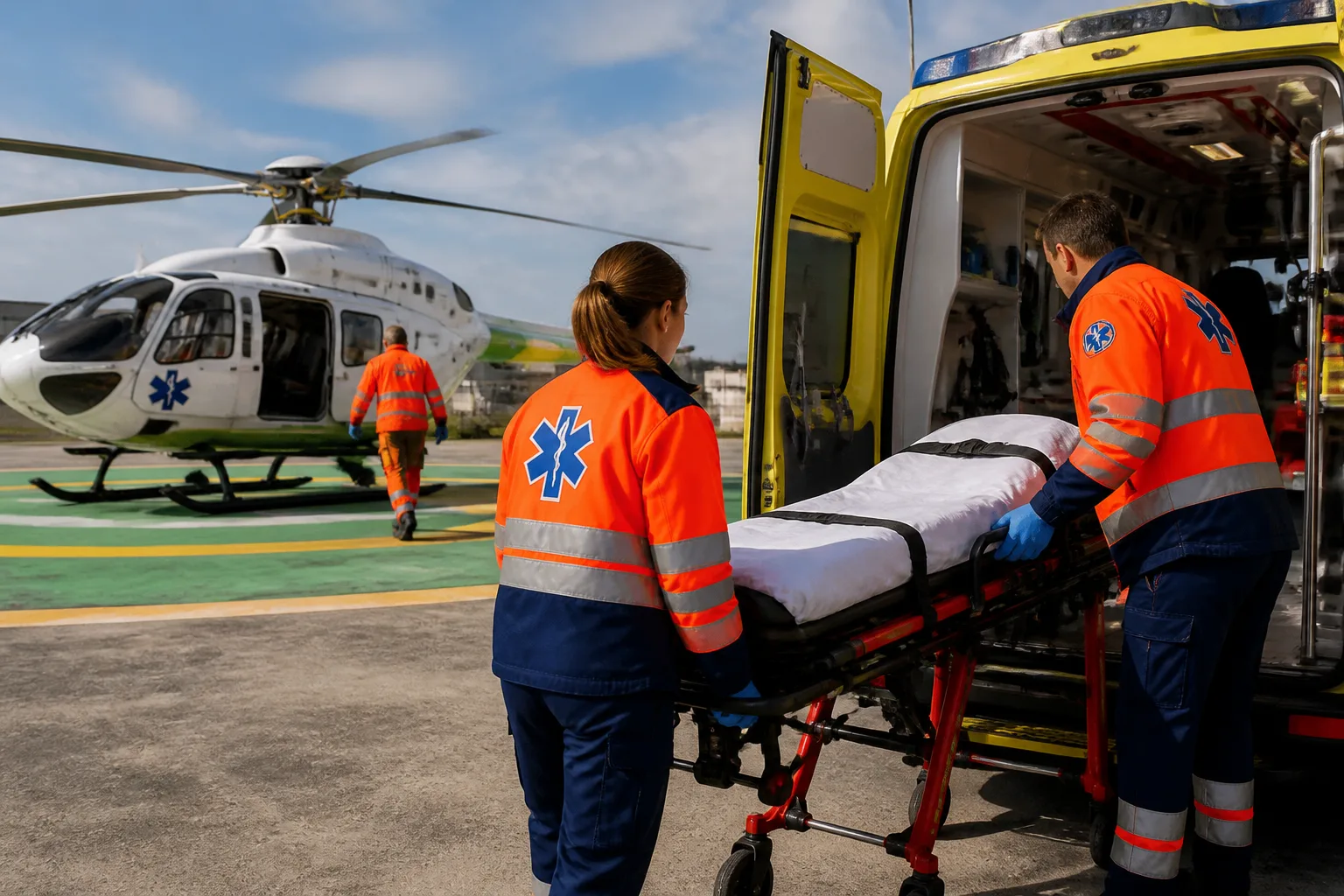
Andalusia’s 061 Emergency Health Service received 1,510,500 calls in the first half of 2026, up 1% from the 1,497,711 calls handled in the same period last year. That amounted to an average of 8,277 calls a day. The service is part of the Andalusian Health Service (SAS), under the regional government’s Department of the Presidency, Health and Emergencies.
The 061 emergency line accounted for the largest share of calls, with 395,750, or 26.2%. The 112 line accounted for 20.7% and the Andalusian Telecare Service for 13.4%. Other calls came through provincial health-centre urgent-care lines, Salud Responde, the medical transport line and internal communications among emergency teams.
The calls handled by 061 coordination centres corresponded to 731,649 urgent and emergency requests for assistance. Common reasons included changes in vital signs or level of consciousness, such as fainting or suspected stroke, followed by abdominal, chest and back pain. In 22.2% of cases, requests were resolved without deploying medical resources. Teams were activated 345,335 times to attend patients directly at home or in public places.
Primary-care urgent-response resources—including doctors, nurses, emergency medical technicians and mobile advanced-care teams—were deployed 309,071 times, mostly for urgent and non-deferrable cases and home visits. 061 emergency medical teams were deployed 35,503 times, mostly for patients at risk of death, and critical-care interhospital transfer teams were activated 761 times.
The 767 healthcare professionals working for the 061 service—303 doctors, 237 nurses and 227 emergency medical technicians—averaged 194.5 emergency interventions a day. Of the 061 team deployments, 2.1% were by air: the service’s five medical helicopters flew 765 missions. The remaining 97.9% were ground responses, including 26,568 by emergency medical teams, 6,060 by advanced coordination teams and 2,110 by basic life-support teams.
During the first half of the year, 061 teams treated 26,258 patients, most of them in life-threatening situations. In urban areas, teams reach 91% of patients in under 15 minutes. Common conditions included serious trauma, acute coronary syndrome, arrhythmias, fainting, acute shortness of breath, seizures, stroke and cardiac arrest.
The service also worked on the Andalusian Urgent and Emergency Care Plan, which aims to improve coordination and consistency across the region. Priorities include improving care pathways, integrating information systems, establishing shared protocols, strengthening staff training and improving responses during periods of high demand and major emergencies.
The TREX project to provide blood components during emergencies outside hospital was extended across Andalusia. In July, the medical helicopters based in Cádiz and Córdoba joined those already providing the service from Málaga, Granada and Seville. All five helicopters can now administer red blood cell concentrates and fibrinogen to patients with severe, life-threatening bleeding. Since the project began, 61 pre-hospital transfusions have been given, with no reported complications or transfusion reactions. Seville’s air team has also developed a procedure for paediatric patients, which is due to be extended to the rest of the region.
The service also worked on a coordinated procedure for interhospital transfers of adults receiving extracorporeal membrane oxygenation (ECMO). It reinforced psychological support for patients, victims and families affected by emergencies, and coordinated medical plans for major public events. These included 62 requests for assistance related to the Jerez Motorcycle Grand Prix, care for 402 people at the Plan del Cerro pilgrimage—96.5% of whom were treated at the event site—and assistance to more than 1,850 people during El Rocío. The El Rocío plan included a helicopter and 31 medical and logistical vehicles; wildfire-related changes to return routes led to the opening of two additional medical points.
Work also continued to accredit all eight provincial 061 services as training units for the new Emergency Medicine specialty. The accreditation will allow them to join the units responsible for training the first group of residents under the 2025–26 intake.