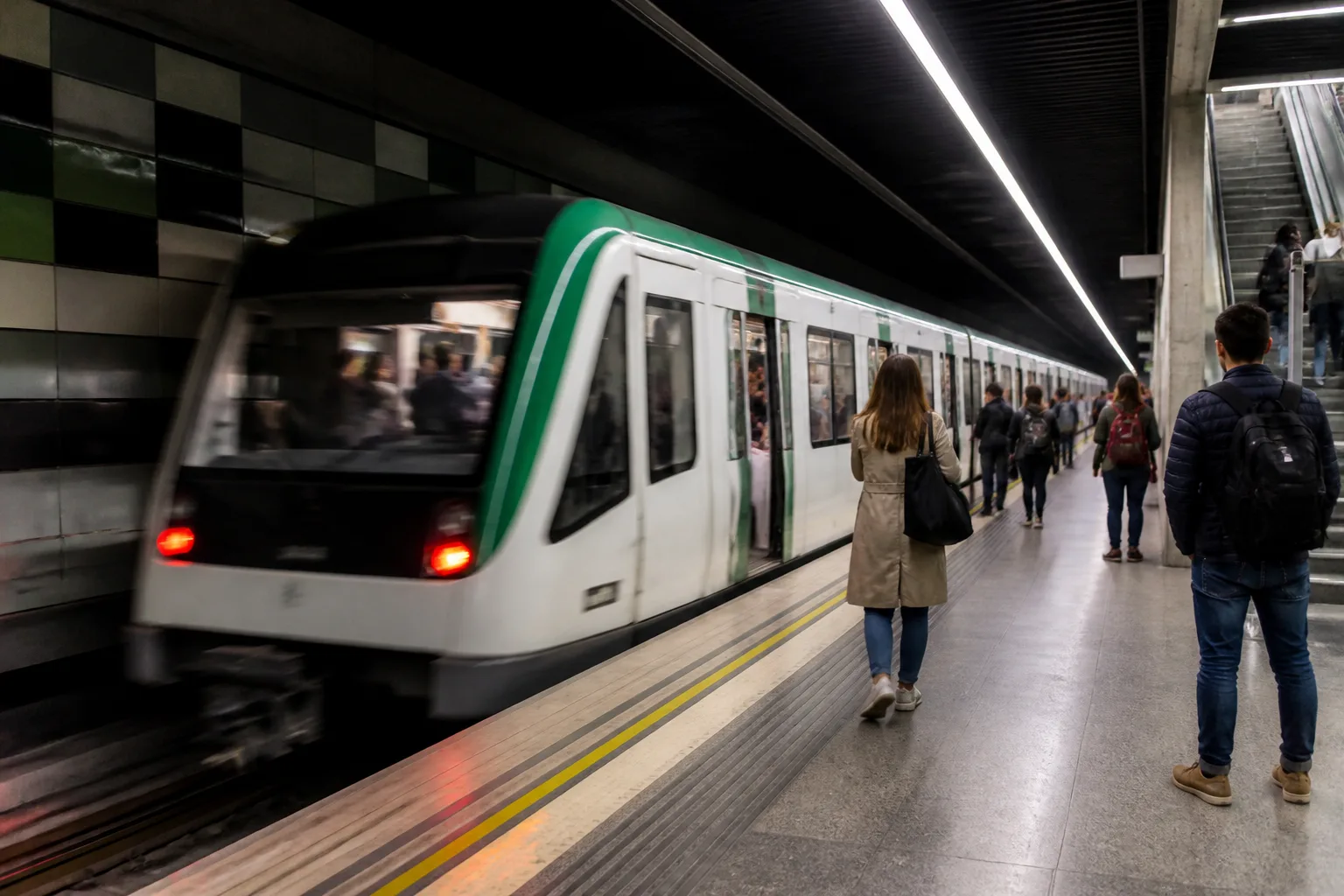
The three metro systems operating in Andalusia, managed by the Regional Ministry of Public Works and Mobility through the Public Works Agency, set a first-half passenger record. The systems in Seville, Málaga and Granada carried a combined 32,374,877 passengers between January and June 2026, an increase of 3.7%—about 1.5 million passengers—compared with the same period in 2025.
Regional Minister for Public Works and Mobility Mario Muñoz-Atanet said the figures showed that Andalusia’s metros had become “central to mobility in large cities” thanks to users’ confidence. He referred to recent satisfaction surveys, which rated the services highly. “We are convinced that the goal is continuous improvement in public transport, both in the service and in extending existing lines,” he said.
The three systems averaged more than five million passenger journeys a month during the first half of 2026. Their totals were similar across the two quarters: 16.03 million passengers from January to March and 16.34 million from April to June.
Seville Metro, which began commercial service in April 2009, had both the largest passenger total and the strongest year-on-year growth. Line 1 carried 13,320,792 passengers in the first half, up 5.6% from the same period a year earlier, or more than 700,000 additional passengers.
Málaga Metro, which began commercial service to El Perchel in July 2014 and extended to the historic centre at Atarazanas in March 2023, carried 9,953,379 passengers. That was 279,042 more passenger journeys than in the first half of 2025, an increase of 2.88%.
Granada Metro, in commercial service since September 2017, carried 9,160,565 passengers. Demand rose by 152,339 journeys, or 1.7%, compared with the same period of 2025.