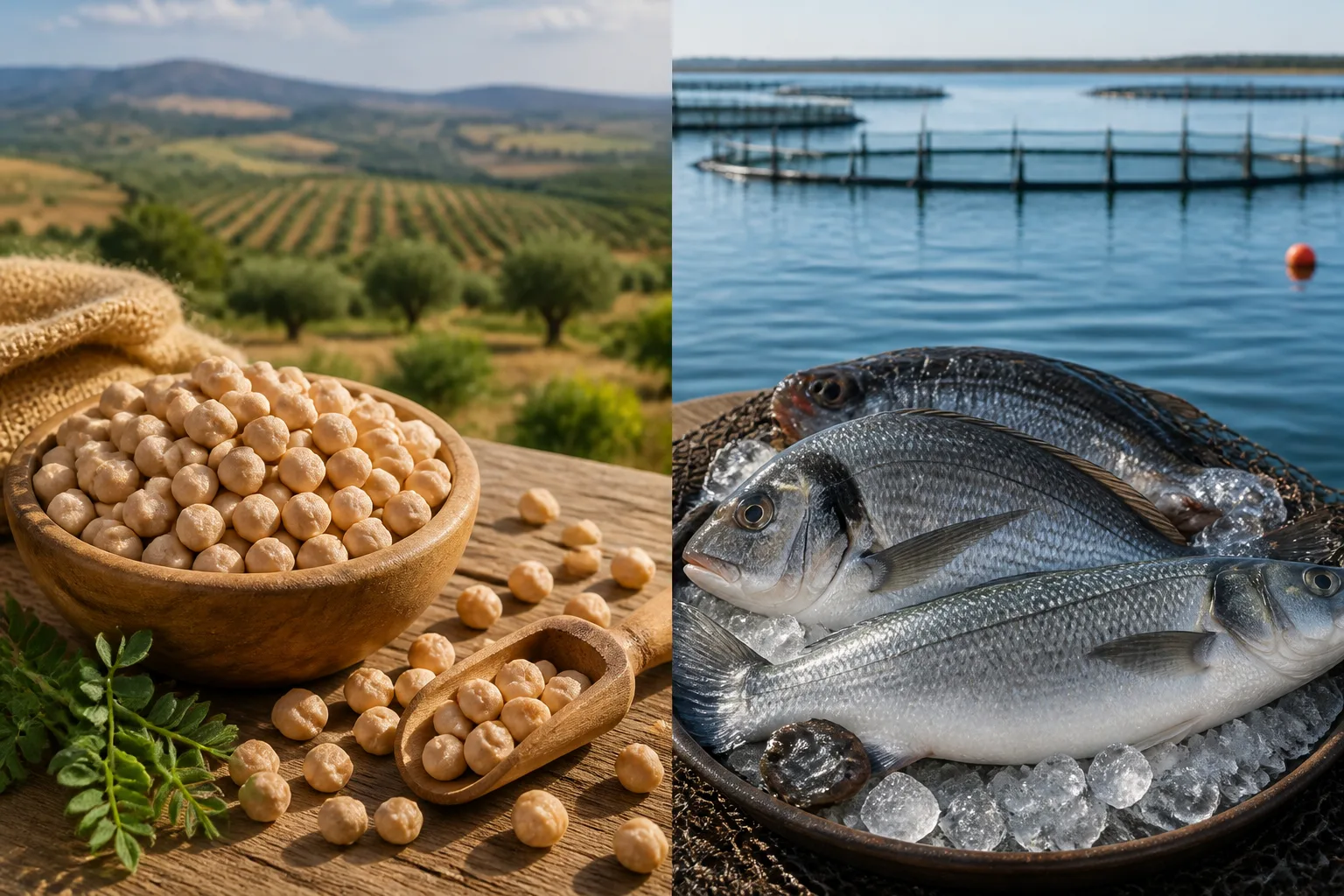
The protected designation of origin (PDO) Garbanzo Campiña de Córdoba is nearing the final step before registration in the European Union’s register of geographical indications, following the European Commission’s review of its documentation. The Andalusian Regional Government’s Department of Agriculture, Fisheries, Water and Rural Development has worked with the sector to promote the designation as a way to improve producers’ competitiveness and profitability. If approved by the EU, the Córdoba designation would join the protected geographical indication (PGI) Garbanzo de Escacena, the first European-recognised designation for this Andalusian product. Garbanzo de Escacena covers chickpeas from areas of Huelva and Seville provinces.
The application for the PGI Pescado de Esteros de Andalucía is also at an advanced stage. The Andalusian government is providing the European Commission with the information it has requested as the procedure continues. If approved, the designation would join five other EU-recognised Andalusian names in the fish sector: the PGIs Caballa de Andalucía, Melva de Andalucía, Mojama de Barbate and Mojama de Isla Cristina, and the traditional speciality guaranteed (TSG) Pulpo seco de Adra.
Both applications have had transitional national protection from the Andalusian government since February 2026, while the European Commission carries out its review.
The Córdoba PDO would cover ‘blanco lechoso’ chickpeas, described as tender, creamy and fine in texture, grown in 27 municipalities across five areas: Córdoba city; Campiña Este; Campiña Sur; Alto Guadalquivir; and Valle Medio Guadalquivir.
The Pescado de Esteros de Andalucía PGI would cover fresh European seabass (Dicentrarchus labrax) and gilthead seabream (Sparus aurata) raised in Andalusian coastal ponds in Cádiz, Huelva and Seville provinces. The fish are produced in semi-intensive systems using ponds excavated on land. The stated distinguishing features of the production area include Atlantic conditions and tidal influence, which bring seawater containing nutrients and natural food into the ponds. Phytoplankton, zooplankton and young fish carried in by the tide contribute to the ponds’ ecosystem and aquaculture production.
Andalusia currently produces food and drink covered by 71 quality designations, including PDOs, PGIs and TSGs. Of these, 67—94%—are listed in the EU register. Four designations remain in the process of seeking EU recognition: the PDO Garbanzo Campiña de Córdoba and the PGIs Aceituna Gordal de Sevilla, Aceituna Manzanilla de Sevilla and Pescado de Esteros de Andalucía.