Andalusia’s regional minister for Artificial Intelligence, Digital Development and Public Administration, José Antonio Nieto, called on Spain to ensure that its future data-centre regulations reflect differences between territories and protect strategic investment in the digital economy. Speaking on Thursday at Málaga’s National Centre for Digital Content, he welcomed the Spanish government’s willingness to negotiate and consider changes to the draft royal decree after reviewing objections submitted by Andalusia.
Nieto said data-processing centres (CPDs) are important to strengthening Andalusia’s digital sovereignty and building its own capacity for data storage, processing and computing. He warned that rules that make it harder to establish data centres in Spain could instead shift projects to other countries, increasing Andalusia’s technological dependence and limiting its ability to develop solutions in areas including artificial intelligence, cybersecurity, health, research and digital public services.
The regional government says around 20 data-centre projects are under way in Andalusia, representing approximately €10 billion in investment. It says they could support economic activity, skilled employment and business opportunities in artificial intelligence, cybersecurity, digital services and the technology sector. Nieto linked this potential to Málaga’s digital ecosystem, which includes technology companies, talent, international connectivity and innovation spaces such as the National Centre for Digital Content.
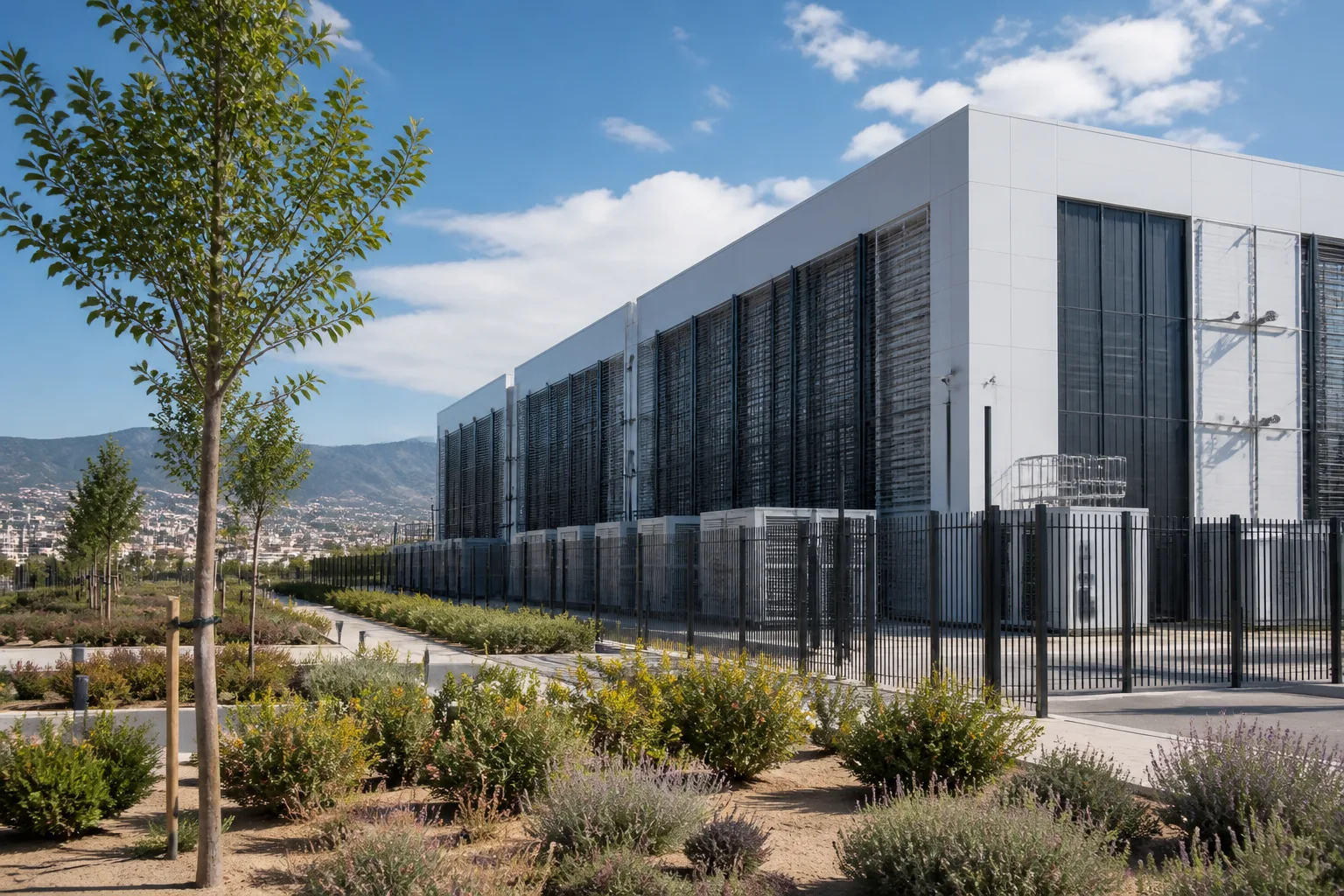
One project highlighted by the regional government is a data centre proposed by Saltburn Holding as part of the expansion of Málaga TechPark. It has been declared a business investment of strategic interest to Andalusia. The project envisages an investment of €1.257 billion, computing capacity of 100 megawatts and 254 direct jobs during operation, in addition to construction employment.
The Junta de Andalucía says it supports more sustainable and efficient data centres that use energy and water responsibly, but wants requirements to account for local climate conditions. Andalusia ended 2025 with 17,360 megawatts of installed renewable capacity, after increasing capacity by 20% that year. It accounted for 24% of all new renewable capacity installed in Spain from 2023 to 2025, according to the release.
The regional government also wants Spanish rules to align with the European Union’s timetable for a shared data-centre labelling and classification system, and says Spain should avoid imposing requirements more restrictive than those in other member states. It is seeking broader participation by regional governments, technology companies and the energy sector in the regulatory process.
Nieto also called for legal certainty for projects already in development. The Junta considers the proposed transition periods insufficient for projects that have applied for or received grid access and connection permits, because they do not account for completed investment, committed contracts, secured financing or technical decisions that are difficult to reverse. It proposes transition arrangements based on each project’s actual stage of development, along with safeguards for publicly promoted data centres that support essential services and public-sector digital sovereignty.
Málaga Mayor Francisco de la Torre backed combining sustainability goals with the development of strategic digital infrastructure. He said the city’s investments in innovation, technology and the digital economy had created an ecosystem that data centres could help develop, and called for legal certainty for committed investments and regulations adapted to local conditions.