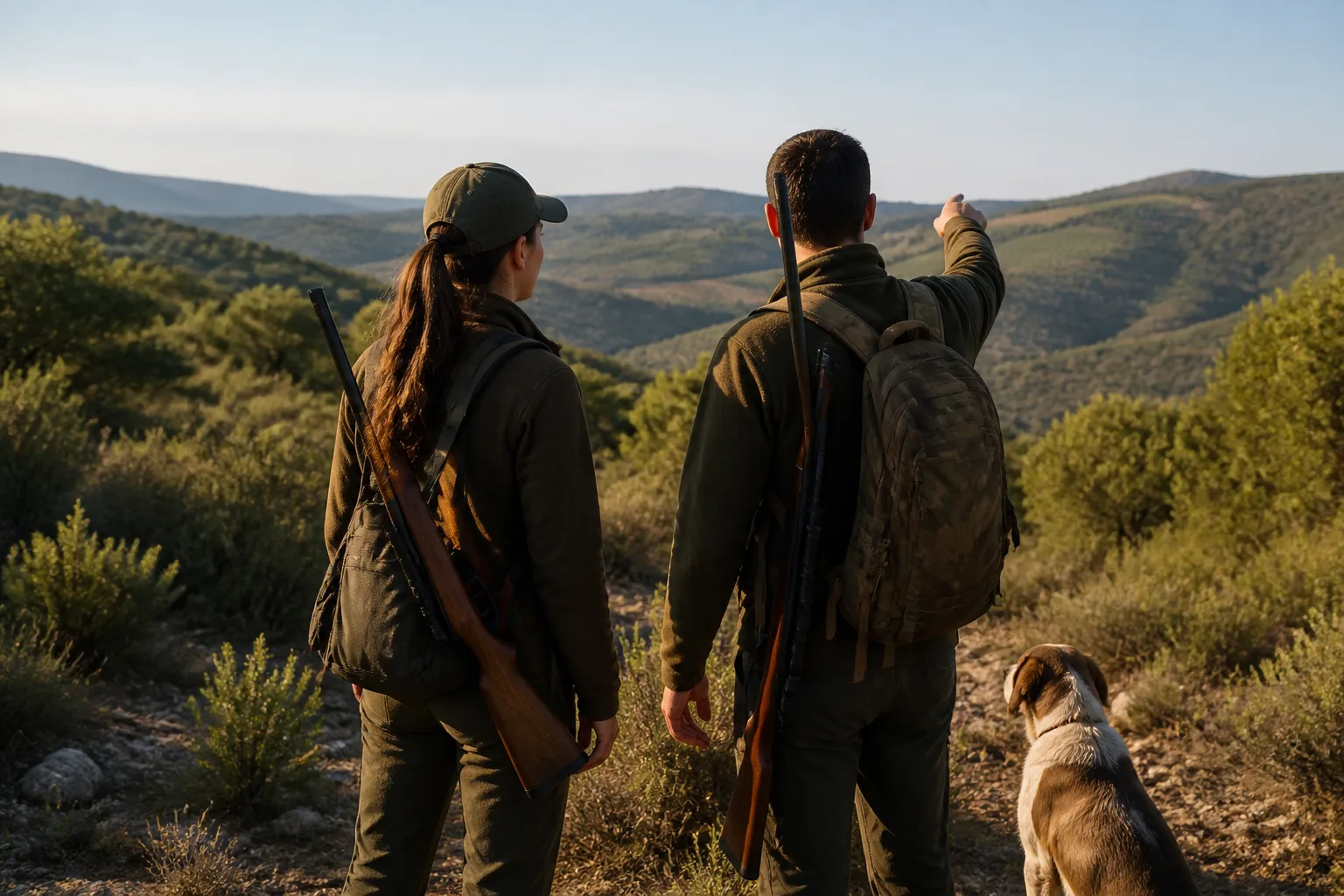
Andalusia’s hunting sector employs 32,943 people, including 9,168 directly, and contributes €1.748 billion to the regional gross domestic product, Sustainability and Environment Minister Fina Martínez said at the opening of the 18th Ibercaza Hunting and Fishing Fair in Jaén. She described the sector as economically, socially and environmentally significant and said it was one of the drivers of the rural economy.
The fair is being held at the Jaén Trade Fair and Conference Centre (IFEJA) from September 25 to 27, with 80 Spanish and international exhibitors. The programme includes a virtual hunting simulator, free tastings, workshops, talks, live cooking demonstrations and educational activities.
Martínez presented measures under the Andalusian Hunting Plan 2023–2033, which sets out eight objectives, 40 measures and more than 175 actions for the sustainable and orderly management of hunting. The plan includes training and financial measures aimed at reversing the decline in younger people taking up the activity. The average age of people who hunt has risen from 42 to more than 52 over the past decade, she said.
Measures include hunting events for women and young people, designated areas in each hunting estate and the use of public land where newcomers can learn. Andalusia’s 2026 budget provides for a 30% reduction in the fee for issuing a hunting licence and an exemption for people over 65. Those under 18 and registered hunters are eligible for a 50% reduction. The regional ministry has also joined the Andalusian Hunting Federation’s Caza Joven programme for people aged 18 to 25.
For the 2026–2027 hunting season, the ministry has included free permits for women in a draw. In September, a total of 58 free permits were offered through the Caza Joven and Mujer Cazadora draws: 29 in an age-restricted draw and 29 specifically for women. The permits cover hunting deer, mouflon, partridges and Spanish ibex in Jaén, Almería, Córdoba, Granada, Málaga and Seville; half are allocated in Jaén.
The plan also includes digitalisation through the Capture app, which brings together online procedures related to hunting and inland fishing. Under a One Health approach, the plan calls for monitoring wildlife populations and addressing environmental, animal and human health together. It notes that high numbers of deer and wild boar, and concentrations of animals around water or feeding sites, can increase the risk of disease transmission. The regional government has also introduced the Certicaza certificate, developed with universities and research centres, to verify the nutritional properties and quality standards of game meat.
Andalusia has almost 163,000 licensed hunters, about 90,000 of them members of federations, and more than 7,500 private or sporting hunting estates. These cover 83% of the region, or nearly seven million hectares. Jaén has 894 estates, covering 1,238,981 hectares, and 19,281 people with valid hunting licences.