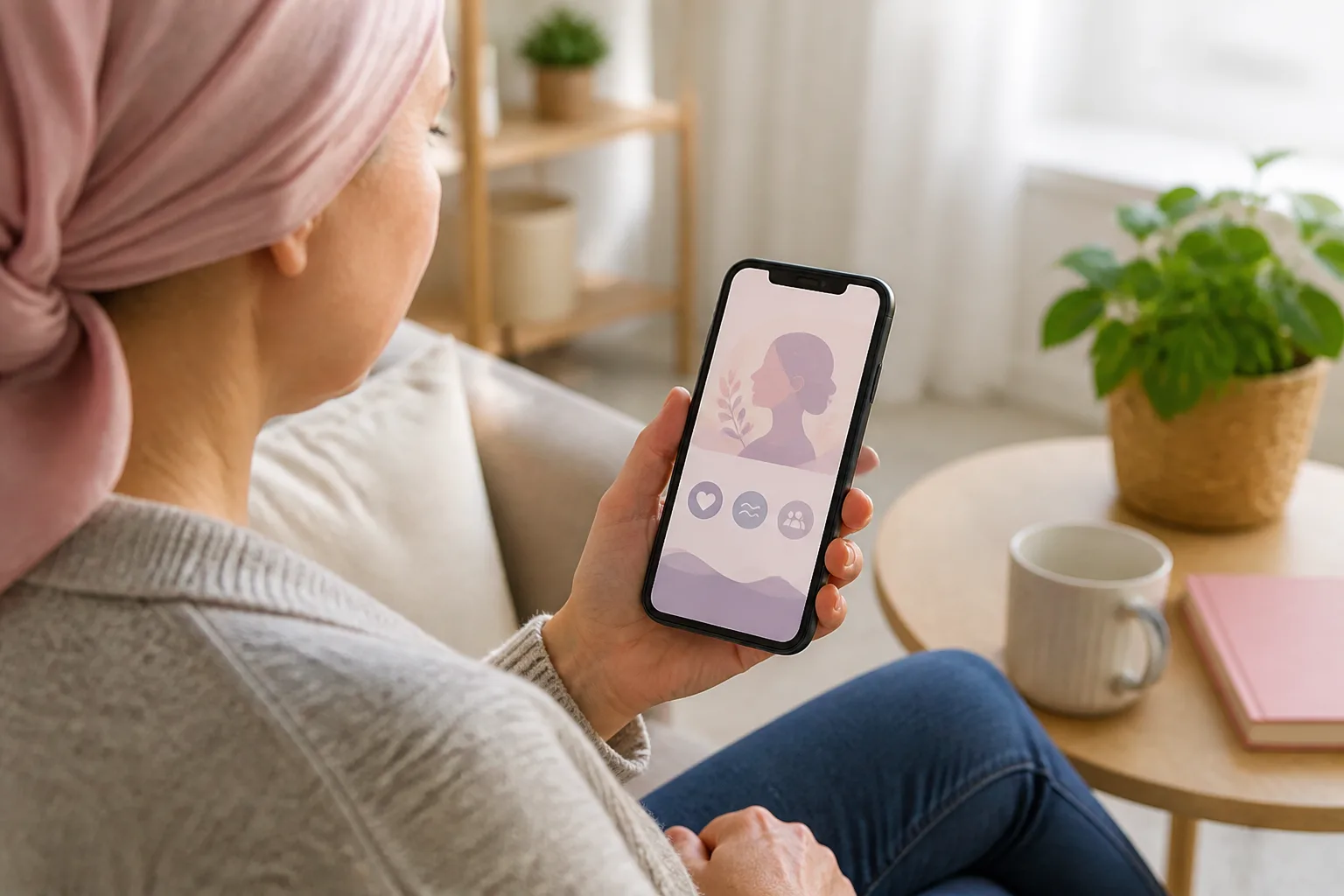
A project led by professionals at the Hospital Universitario Costa del Sol (HUCS) has added the Spanish Association Against Cancer in Málaga (AECC) as a partner in developing a digital psychological support tool for women receiving follow-up care after breast cancer or who have survived the disease. The collaboration is intended to strengthen patient and association involvement, improve awareness of the project and help make the intervention accessible and responsive to women’s emotional needs.
SerenApp is a research initiative at the hospital in Marbella, Málaga, led by professionals from its Medical Oncology and Research and Innovation units. It is funded by the Carlos III Health Institute (ISCIII), grant PI24/01193, and aims to develop a digital psychological intervention to prevent and reduce symptoms of stress, anxiety and depression in people with breast cancer.
The project’s principal investigators are Esperanza Varela, from the HUCS Research and Innovation Unit, and oncologist Irene Zarcos. Both belong to IBIMA’s research group on translational research in cancer and other prevalent chronic diseases. The project is being conducted through IBIMA and the Research Network on Chronicity, Primary Care and Health Promotion (RICAPPS), with a multidisciplinary team working in psychology, oncology, digital health and clinical research.
SerenApp is based on co-creation with women who have survived breast cancer, healthcare professionals and patient associations. An AECC psychologist is part of the working group, contributing experience supporting patients and helping incorporate their needs into the design of the tool.
The project has completed its co-creation phase and is now in technological development and content preparation. Its study protocol has been registered with ClinicalTrials and is under evaluation for publication in an international scientific journal.
In 2024, nearly 36,000 people were diagnosed with breast cancer in Spain; approximately 1% were men. Málaga province recorded 1,283 new diagnoses among women. The AECC assisted 828 patients, equivalent to 64.5% of detected cases. The most requested services included psychological care: 2,041 sessions were provided to 551 women. Other services included specialist physiotherapy for preventing lymphoedema and managing after-effects, social support, nutrition and loans of orthopaedic equipment.