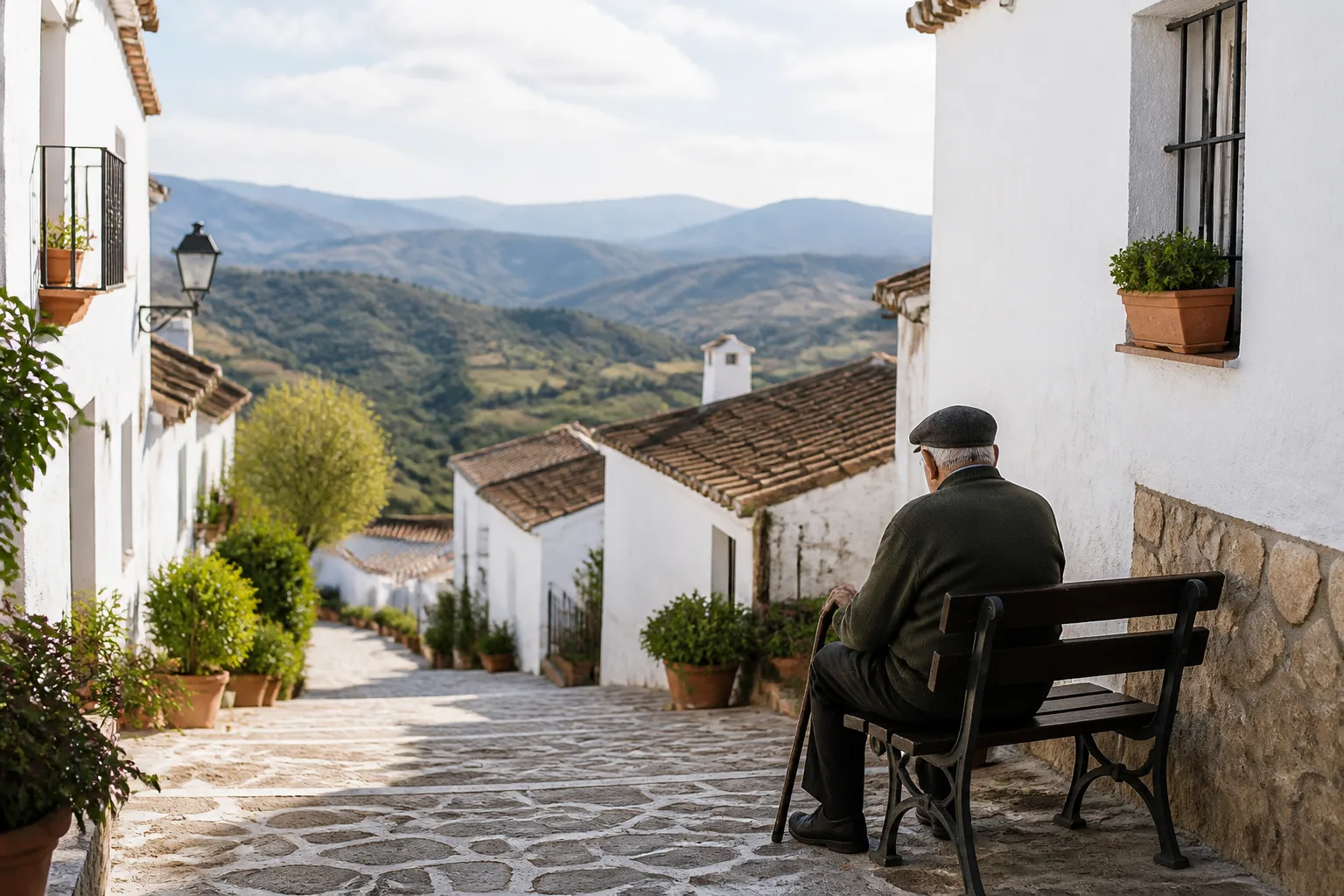
Residents aged 90 and over account for more than 4% of the population in three Málaga province villages: Faraján, Genalguacil and Parauta, according to figures from Spain’s National Statistics Institute (INE) reported by SUR in English.
The proportions are based on small populations. Faraján has 13 residents in their nineties out of 287 people; Genalguacil has 15 out of 363; and Parauta has 11 out of 270. The figures describe the share of each municipality’s population, not the largest number of people aged 90 or over.
By absolute count, Valle de Abdalajís leads among the municipalities listed, with 55 residents aged 90 and above out of a total population of 2,457. That is a smaller proportion than in the three leading villages.
The data point to a concentration of older residents in inland parts of the province, particularly the Serranía de Ronda, as well as in the Axarquía. SUR’s report notes that the highest proportions are generally found in very small villages, where younger residents may have moved to larger towns for employment opportunities.
Serrato is next in the ranking, with people aged 90 or over making up 3% of its population. A further group of municipalities has shares between 2% and 3%: Alfarnate, Benadalid, Alfarnatejo, Benarrabá, Sedella, Atajate, Valle de Abdalajís, Cañete la Real, Cartajima, Montejaque, Pujerra and Alpandeire.
The figures offer a snapshot of how residents aged 90 and above are distributed across municipalities; they do not, by themselves, explain why the proportions differ. In particular, a high share in a small village can reflect a modest number of people as well as the size and age structure of its overall population.
SUR’s report also refers to a separate analysis showing that the number of people aged over 90 in Málaga province rose by 55% over the past decade. The supplied material does not provide further detail on that analysis or specify what comes next for the municipal figures.