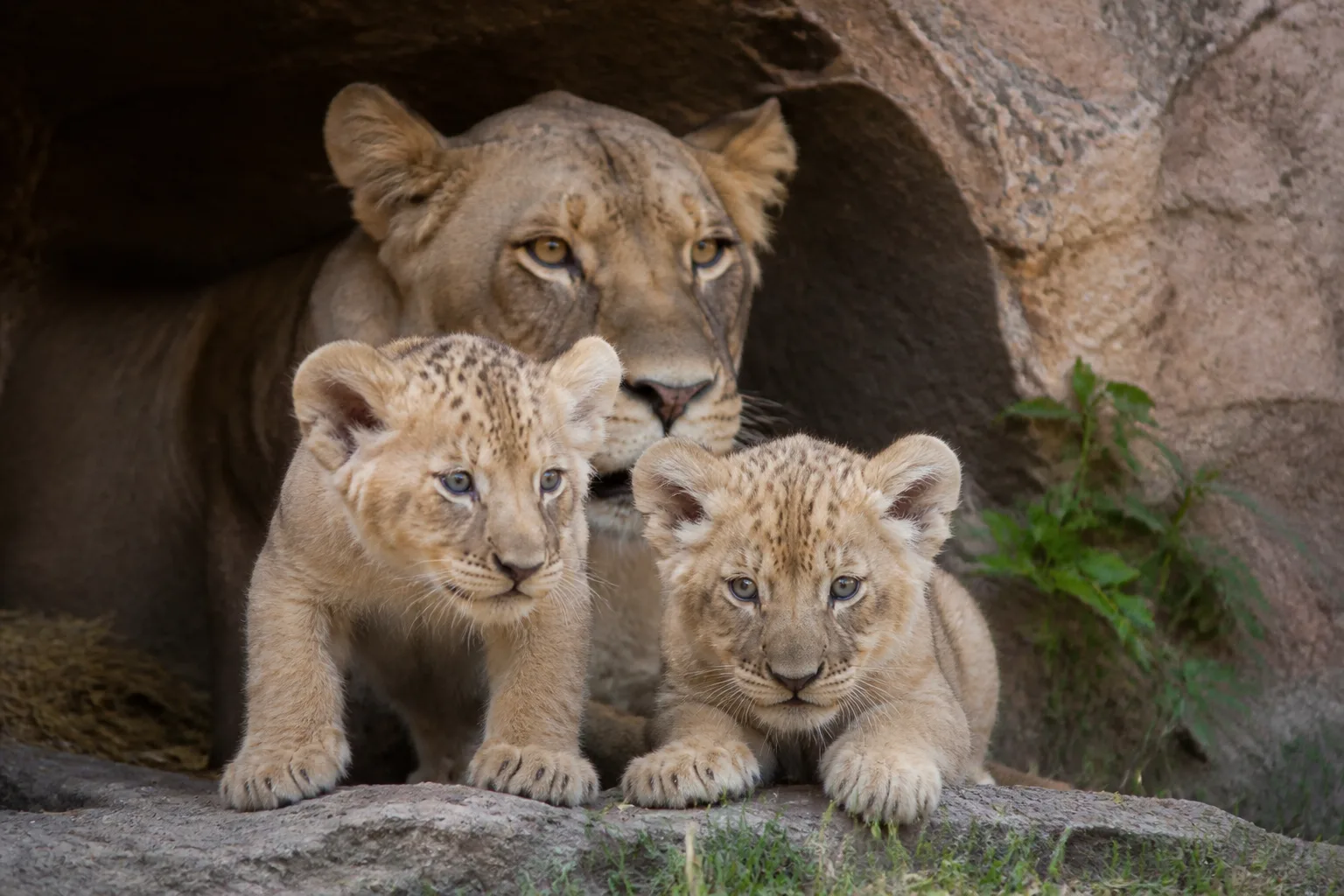
Two Atlas lion cubs have been born at Selwo Aventura, the wildlife park in Estepona. Their birth is part of the European Endangered Species Programme (EEP), which coordinates breeding to help maintain the subspecies’ genetic diversity.
The cubs are offspring of Ghizléne, who arrived at Selwo from Plzeň Zoo in the Czech Republic in spring 2025, and Tayo, transferred from Hanover Zoo in Germany. The discovery report says Tayo’s lineage is entirely Atlas lion, giving him particular genetic value to the programme.
Atlas lions are native to North Africa and associated with the Atlas Mountains. They disappeared from the wild in the 1950s. Their continued survival relies on managed populations, including around 100 animals at Morocco’s Rabat National Zoo, descended from the royal collection, and breeding networks in European zoos.
The cubs have spent their first weeks in their enclosure with their mother and under the care of Selwo’s technical team. They have opened their eyes and passed initial veterinary checks. According to the report, each weighs eight kilos; both have been dewormed, microchipped and had hair samples taken for genetic profiling and EEP registration.
The report also describes a management challenge involving the mother’s sister, Ghalíya: she was separated and later gradually reintroduced. The process was intended to reflect the animals’ social behaviour, though no further details were provided.
The cubs are expected to venture onto the enclosure’s outdoor meadow in the coming days, allowing visitors to see them. Their mother is expected to continue nursing them until they are between seven and ten months old. The park says the breeding effort is intended to strengthen the gene pool; any future return to the lions’ original habitat would depend on conservation work beyond this birth.
The news concerns visitors to Selwo as well as conservation efforts focused on the subspecies. The discovery report also notes that the International Union for Conservation of Nature classified the lion as Vulnerable globally in its 2015 Red List. It cites habitat loss, conflict with people and isolated populations with limited genetic diversity among the threats to lions.